

Understanding Every Dinner Kit Delivery Service Category
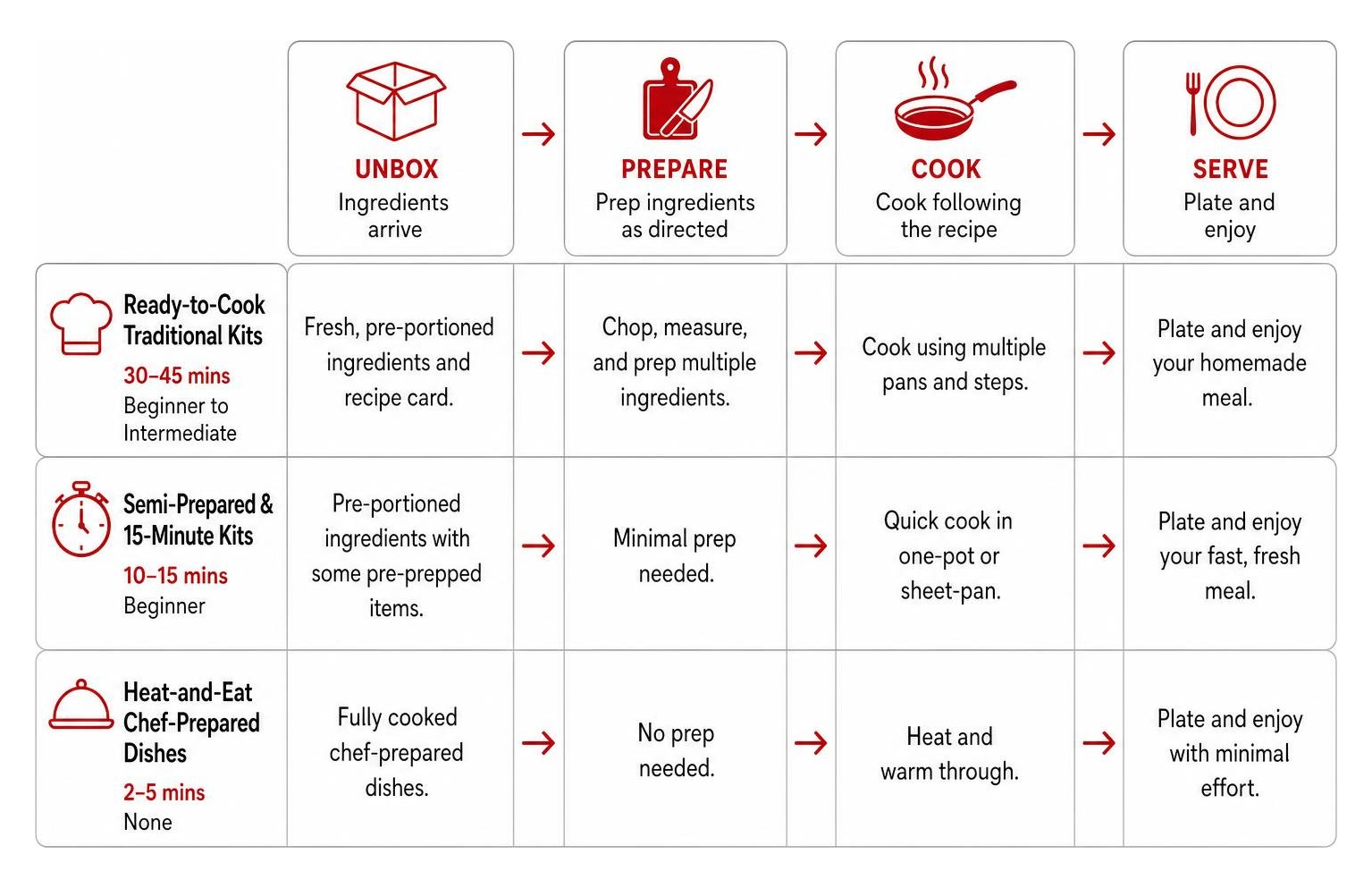
A dinner kit delivery service delivers fresh, pre-portioned ingredients or fully prepared meals directly to your door, eliminating meal planning and grocery store trips. The modern market spans three main categories: traditional ready-to-cook kits featuring raw ingredients and step-by-step recipes (30–45 minutes), semi-prepared 15-minute kits with pre-chopped components, and heat-and-eat dishes that reheat in under five minutes. These convenient meal solutions allow households to match their dinner routine to their desired balance of cooking time, culinary skill, and cleanup. Scratch Catering and Fine Foods helps diners navigate these formats to find the best fit for their schedule.
| Meal Kit Category | Prep Time | Cooking Skill Needed | Cleanup Effort | Core Benefit |
|---|---|---|---|---|
| Ready-to-Cook Traditional Kits | 30–45 mins | Beginner to Intermediate | Moderate (Multiple pans/utensils) | Culinary skill-building & hands-on cooking |
| Semi-Prepared & 15-Minute Kits | 10–15 mins | Beginner | Low (One-pot or sheet-pan) | Fast weeknight prep with fresh cooking |
| Heat-and-Eat Chef-Prepared Dishes | 2–5 mins | None | Minimal (Zero prep dishes) | Maximum convenience with artisan flavors |
Ready-to-Cook Traditional Kits
Traditional dinner kits focus on providing raw, pre-portioned ingredients alongside detailed, step-by-step recipe cards. These services cater to individuals and families who enjoy the culinary process but want to eliminate the mental gymnastics of planning and shopping.
Most traditional kits feature recipes that take between 30 and 45 minutes to prepare. They teach fundamental culinary techniques—such as making pan sauces, roasting aromatics, and searing proteins. While these kits provide portion control and help minimize refrigerator clutter, they do require standard kitchen gear like chef’s knives, cutting boards, and multiple cooking vessels.
Semi-Prepared and 15-Minute Meal Kits
Semi-prepared kits bridge the gap between from-scratch cooking and instant dining. By delivering pre-chopped vegetables, par-cooked grains, and pre-mixed sauces, these kits cut total active prep time down to roughly 10 to 15 minutes.
Many of these options emphasize sheet-pan dinners or one-pot recipes to keep dishwashing to a minimum. A growing number of hybrid services also blend quick meal kits with grocery add-ons, allowing households to grab essential pantry staples alongside easy-to-assemble dinners.
Heat-and-Eat Chef-Prepared Dishes
For evenings when chopping onions or monitoring a skillet is out of the question, fully prepared options provide zero-prep convenience. These dishes arrive fully cooked and refrigerated, requiring only a few minutes in an oven or microwave to reach optimal temperature.
Unlike standard frozen meals, premium chef prepared meals preserve moisture, texture, and complex seasoning profiles. Choosing fresh, ready to eat entrees ensures you get a restaurant-quality dining experience on your schedule without spending an hour at the stove.
Cost, Convenience, and Nutrition: Meal Kits vs. Grocery Shopping and Takeout

Deciding to outsource dinner planning often comes down to balancing household budgets with time savings. While buying raw groceries in bulk may carry a lower baseline grocery bill, traditional shopping frequently leads to unused produce, impulse buys, and food spoilage. As noted in various editorial reviews of meal delivery services, meal kits create financial predictability by providing the exact measurements needed for each dish.
Price per Serving and Portion Value
When evaluating meal services, look past introductory promotions to examine standard portion costs, shipping fees, and weekly volume commitments. Many services offer tiered pricing where the price per serving drops as your weekly box size expands.
That specialty dietary menus, premium protein upgrades, and flat-rate shipping fees can alter the total weekly investment. Factoring in delivery costs ensures you get a realistic picture of your recurring expenses.
Sourcing Quality, Nutrition, and Sodium Levels
Ingredient sourcing varies across providers. Some services focus on USDA-certified organic produce and responsibly sourced meats, while others prioritize everyday value cuts to keep expenses low.
Nutritional profiles also vary significantly:
- Calorie Variance: Traditional kits and ready-to-eat meals can range anywhere from 400 to over 1,000 calories per serving depending on sauces and starch portions.
- Sodium Monitoring: Ready-to-heat dishes often carry higher sodium levels to preserve flavor during transit; checking nutritional labels is essential for heart-conscious eaters.
- Dietary Balance: Opting for whole-food, balanced entrees offers an effortless route to discovering ready-to-serve food that supports healthy living without sacrificing flavor.
How to Select the Right Provider for Your Household
Choosing a dinner kit delivery service requires assessing your household’s daily schedule, culinary interests, and nutritional preferences. Scratch Catering and Fine Foods recommends evaluating your routine before committing to a subscription.
Key factors to evaluate before subscribing:
- Available Cooking Time: Be realistic about how many minutes you want to spend at the stove on a Tuesday evening.
- Household Demographics: Determine whether you need family-sized four-portion meals or single-serving flexibility.
- Culinary Skill Level: Choose between beginner-friendly, foolproof recipes and advanced culinary kits.
- Dietary Consistency: Ensure the weekly rotating menu reliably meets your household’s dietary criteria.
- Local Availability: Consider whether an artisanal, local gourmet meal prep option better fits your freshness and culinary standards than mass-shipped boxes.
Choosing a Dinner Kit Delivery Service for Busy Families and Solo Cooks
For households with children, mealtime conflict is often the biggest hurdle. Family-focused meal services offer crowd-pleasing staples with approachable flavors, customizable proteins, and minimal cleanup to keep evenings calm.
Conversely, solo cooks and busy professionals often struggle with excessive portions. Finding services that cater to single servings or provide balanced meals that reheat well for next-day lunches ensures you get the most value from a daily meal service without food fatigue.
Matching a Dinner Kit Delivery Service to Dietary Goals and Allergies
Modern dinner kits cater to a wide array of nutritional lifestyles, including keto, Mediterranean, high-protein, plant-based, and gluten-free diets. Most platforms allow you to set your dietary profile to filter rotating menus automatically.
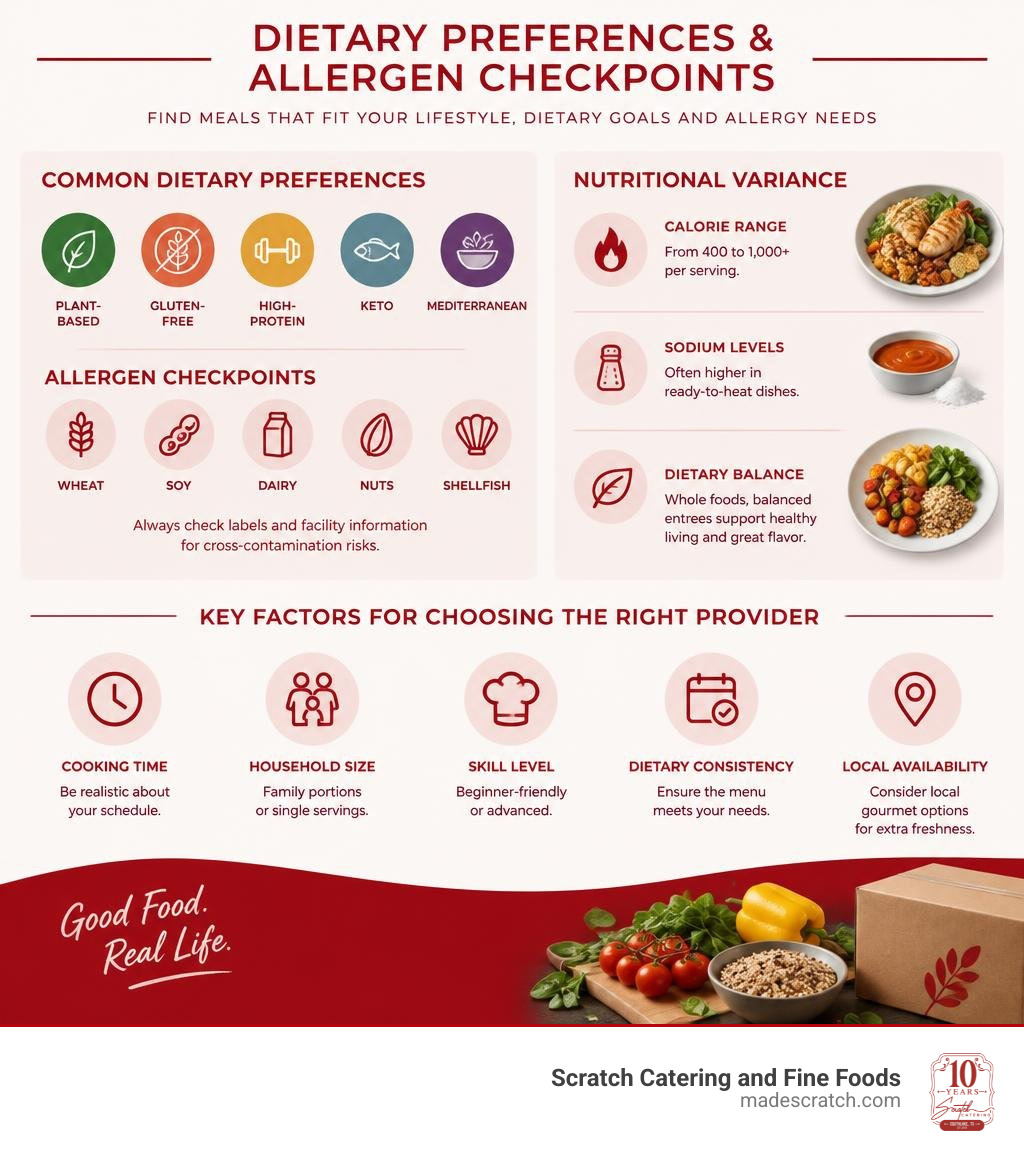
When managing severe food allergies, verify how transparent the company is regarding facility cross-contamination. While many brands clearly label common allergens on recipe cards and digital dashboards, most mass-distribution kits are packed in facilities that handle wheat, soy, dairy, nuts, and shellfish. Reviewing an A to Z guide on ready-to-eat meals can provide valuable perspective on navigating specialty diets safely.
Managing Subscriptions, Delivery Reliability, and Packaging Waste
The logistics of getting fresh food safely to your doorstep require careful management by both the provider and the subscriber.
Managing Sign-Ups, Pauses, and Skip-Week Policies
Most dinner kit companies operate on a recurring subscription model with weekly ordering cutoffs. Online dashboards make it simple to customize menus, change delivery dates, or skip upcoming weeks when traveling.
Always confirm the weekly cutoff window—typically 4 to 6 days before your scheduled delivery day—to avoid unwanted charges. If you prefer avoiding nationwide shipping schedules altogether, checking out daily menu pickup guides for Plano and nearby DFW communities offers a flexible local alternative.
Transit Temperature Control and Eco-Friendly Packaging
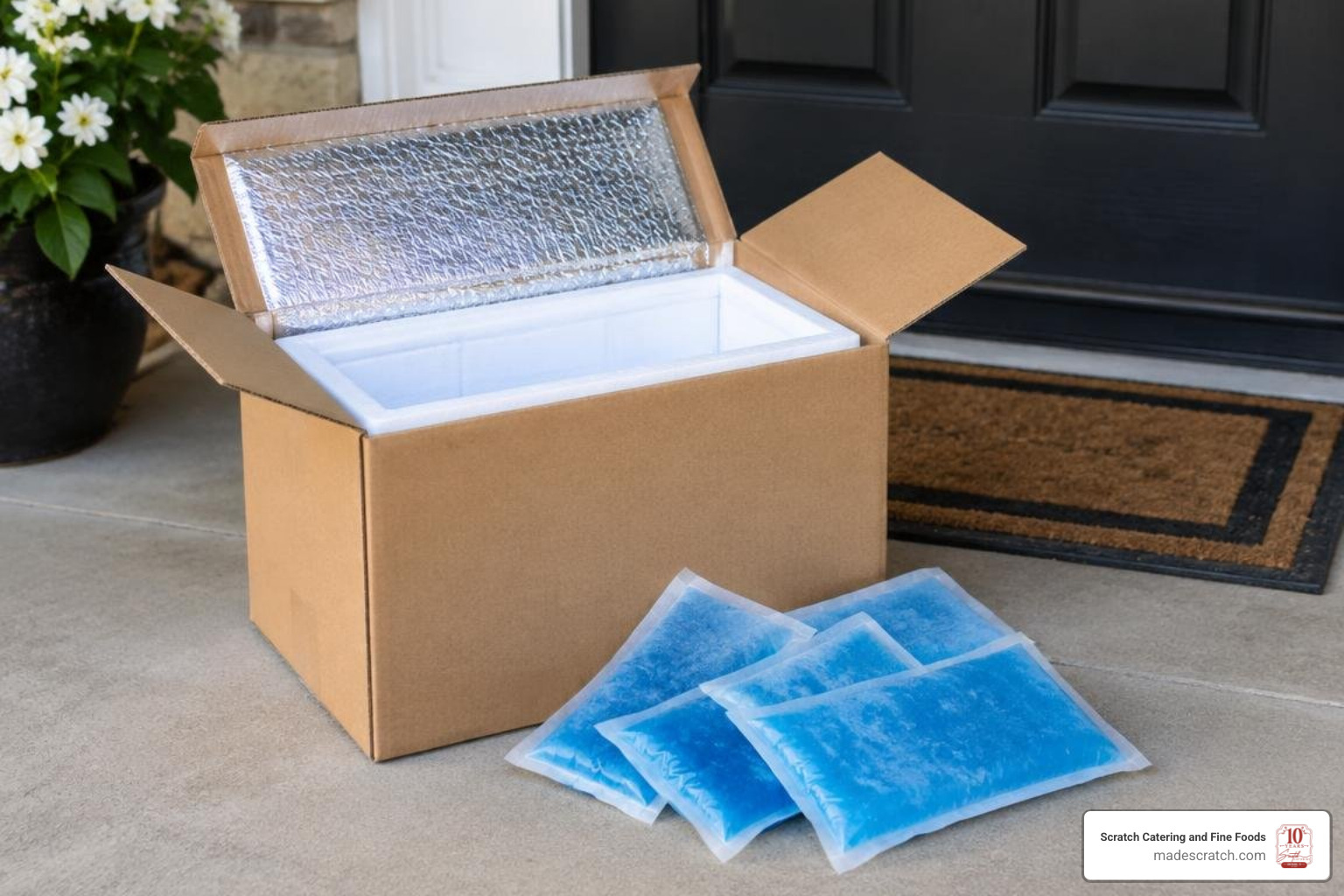
Maintaining food safety during transit is essential. Providers rely on insulated shipping boxes paired with seasonally adjusted gel cooling packs designed to keep proteins and produce below safe temperature thresholds until you unpack them.
Packaging sustainability remains an ongoing priority across the industry:
- Cardboard Boxes: Most shipping boxes use curbside-recyclable corrugated cardboard.
- Thermal Liners: Modern insulation blends often utilize recycled paper, cotton fibers, or water-soluble panels.
- Gel Ice Packs: Most packs contain non-toxic refrigerant gel that can be drained into household trash before recycling the plastic casing.
Frequently Asked Questions About Meal Delivery
How much cooking skill is required for standard dinner kits?
Standard ready-to-cook dinner kits are designed for all experience levels, including complete beginners. Step-by-step recipe cards include photographs for each cooking stage, clear timing cues, and pre-measured seasonings. Most recipes require only standard kitchen utensils like skillets, sheet pans, cutting boards, and knives.
Are weekly meal delivery subscriptions easy to cancel or pause?
Yes. Modern subscription services allow customers to skip weeks, pause accounts, or cancel subscriptions entirely via an online account dashboard without telephone cancellations or penalty fees. You must simply make your adjustments before the designated weekly order cutoff deadline.
How do pre-portioned dinner kits reduce household food waste?
Traditional grocery shopping often forces you to purchase full bundles of herbs, specialty sauces, or bulk produce when a recipe only calls for a small amount. Dinner kits send exact measurements for every component, ensuring every ingredient gets cooked rather than left to spoil in the crisper drawer.
Conclusion
Finding the right dinner kit delivery service comes down to how you want to spend your evenings. Whether you want to master new cooking techniques with a traditional kit, save time with 15-minute meals, or completely eliminate prep work with ready-to-eat entrees, putting dinner on autopilot restores hours of precious free time to your week.
At Scratch Catering and Fine Foods, we believe convenience should never come at the expense of culinary excellence. Led by Chef Teddy B., our culinary team crafts inventive, restaurant-quality dishes made from scratch with premium ingredients. For households throughout Dallas, Fort Worth, Plano, Frisco, Southlake, Grapevine, McKinney, and Arlington looking for superior gourmet meal delivery, we deliver unforgettable flavors straight to your table.
Skip the prep work tonight and explore our handcrafted prepared meals in Dallas to experience gourmet dining made effortless.

