

Allergy Friendly Catering Starts With a Clear Safety Plan
Safe allergy friendly catering means more than adding a gluten-free or vegan dish to the menu. It requires early guest input, a menu built around clearly identified ingredients, and a caterer with defined steps to prevent cross-contact.
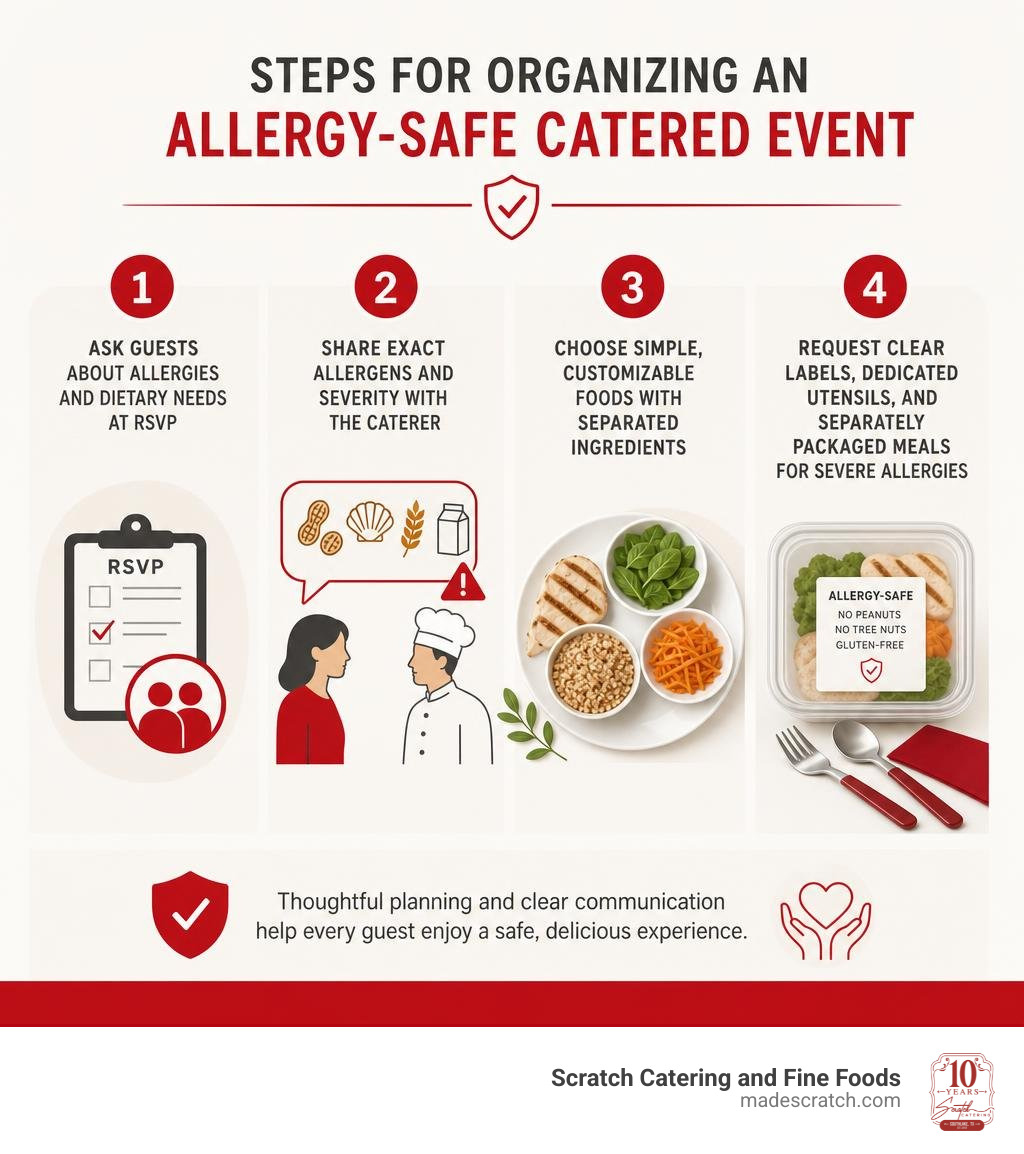
For a safer event:
- Ask guests about food allergies and dietary needs when they RSVP.
- Share the exact allergens and severity with the caterer well before the event.
- Choose simple, customizable foods with separated ingredients.
- Request clear labels, dedicated utensils, and separately packaged meals for guests with severe allergies.
This planning matters. About 6.2% of U.S. adults have a food allergy, and even small amounts of an allergen can cause a serious reaction for some people. A well-run catered meal lets every guest enjoy food that is flavorful, attractive, and safe to eat.
I am Ted Bilsky, founder of Scratch Catering and Fine Foods, and I have built my catering work around creating memorable food for gatherings of every kind. In this allergy friendly catering cheat sheet, I will walk you through the practical questions, menu choices, and safety details that help hosts plan with more confidence.
Learn more about allergy friendly catering:
Major Allergens and Dietary Needs Every Host Must Know
Planning a gathering across Dallas, Fort Worth, Arlington, or Southlake starts with understanding the physiological impact of food triggers. When serving a crowd, precision is vital because every 10 seconds a food allergy reaction sends a patient to the emergency room.
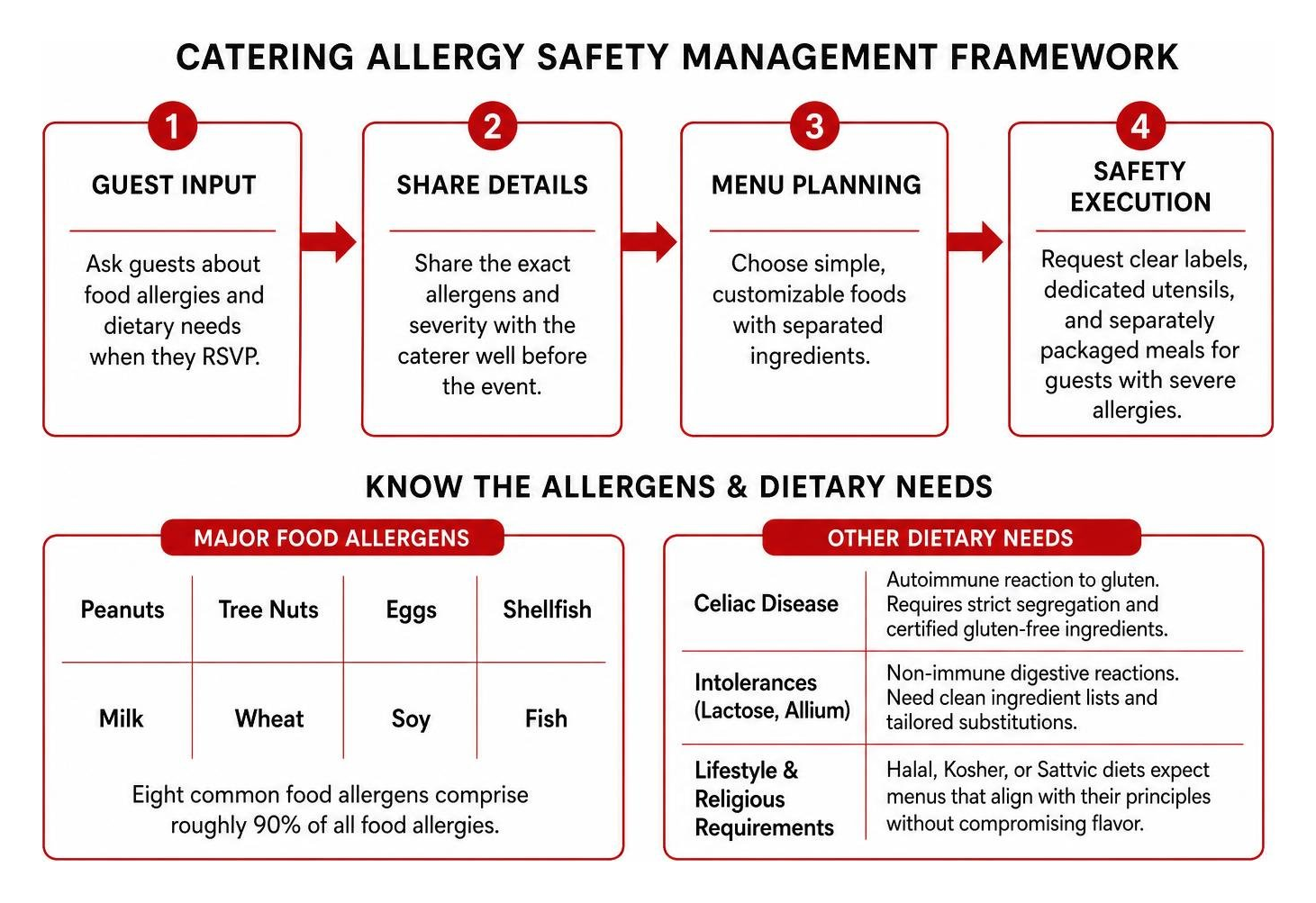
According to Food Allergy Research & Education (FARE), eight common food allergens—peanuts, tree nuts, eggs, shellfish, milk, wheat, soy, and fish—comprise roughly 90% of all food allergies (with sesame recently recognized as the ninth major allergen). For guests with severe sensitivities, exposure to microscopic protein traces can trigger systemic anaphylaxis within minutes, making diligent menu auditing essential for any public or private function.
Beyond true IgE-mediated immune allergies, hosts frequently accommodate other critical dietary requirements:
- Celiac Disease: An autoimmune reaction where any ingestion of gluten causes intestinal damage. This demands strictly segregated prep surfaces, dedicated fryers, and certified gluten-free grains to eliminate all trace contaminants.
- Intolerances (Lactose, Allium): Non-immune digestive reactions that require clean ingredient lists and tailored culinary substitutions, such as utilizing infused oils or dairy alternatives that retain authentic dish textures.
- Lifestyle & Religious Requirements: Guests observing Halal, Kosher, or Sattvic diets (avoiding root aromatics like onion and garlic) expect menus that align with their principles without cutting corners on flavor.
Meeting these needs without delivering boring meals is where custom catering menus shine. By curating a dedicated vegetarian catering menu alongside scratch-made entrees, we ensure that restricted diners receive rich, gourmet selections rather than an afterthought side salad.
Key Steps to Planning Allergy Friendly Catering for Any Event
Whether coordinating an executive luncheon in Plano or a large family reunion in Grapevine, smooth allergen management begins long before the kitchen fires up. Structured coordination between the host, venue coordinators, and the catering team ensures that no dietary details fall through the cracks during service.

Communicating Guest Needs and Timeline Deadlines
Effective allergen communication follows a clear progression:
- RSVP Data Collection: Add a mandatory dietary field on digital RSVP forms and invitation cards. Ask for the specific allergen, whether airborne or contact-sensitive, and the medical severity.
- Annotated Seating Charts: Provide your banquet team with a mapped floor plan highlighting restricted attendees. This allows servers to hand-deliver personalized, safeguarded plates directly to specific table seats without confusion.
- Booking Lead Times: Reserve your date early. Standard events requiring extensive allergen safety require a 4 to 6-week lead time to allow our culinary team to vet commercial ingredient suppliers and adjust prep workflows.
For regional events requiring strict wheat elimination, exploring a dedicated gluten-free catering Grapevine TX guide will give you a clear roadmap for menu vetting and timeline management.
Designing Versatile Menus for Allergy Friendly Catering
The most successful event menus are naturally adaptable. Instead of forcing one dish to fit every restriction, consider formats that isolate ingredients while delivering great flavor and visual appeal:
- Build-Your-Own Bowls: Base stations featuring seasoned rice, quinoa, fresh greens, grilled meats, roasted vegetables, and distinct sauces kept in separate ramekins.
- Mediterranean Salad Bars: Fresh local produce, house-marinated olives, artisanal legumes, and proteins with dressings served strictly on the side.
- Herb-Marinated Grilled Skewers: Naturally gluten-free, dairy-free, and nut-free protein options that present cleanly and hold up exceptionally well during service.
Working with a true scratch kitchen catering provider makes this simple. Because we make our broths, marinades, dressings, and spice rubs from raw ingredients, we know every component in every pan without relying on processed pre-packaged sauces that might conceal wheat starches or peanut traces.
Dessert should never be an exclusion zone either. Reviewing creative guides on how to have your cake and eat it too without the gluten proves that dietary-safe desserts can easily rival traditional pastries in both presentation and taste.
Preventing Cross-Contact in the Kitchen and at the Venue
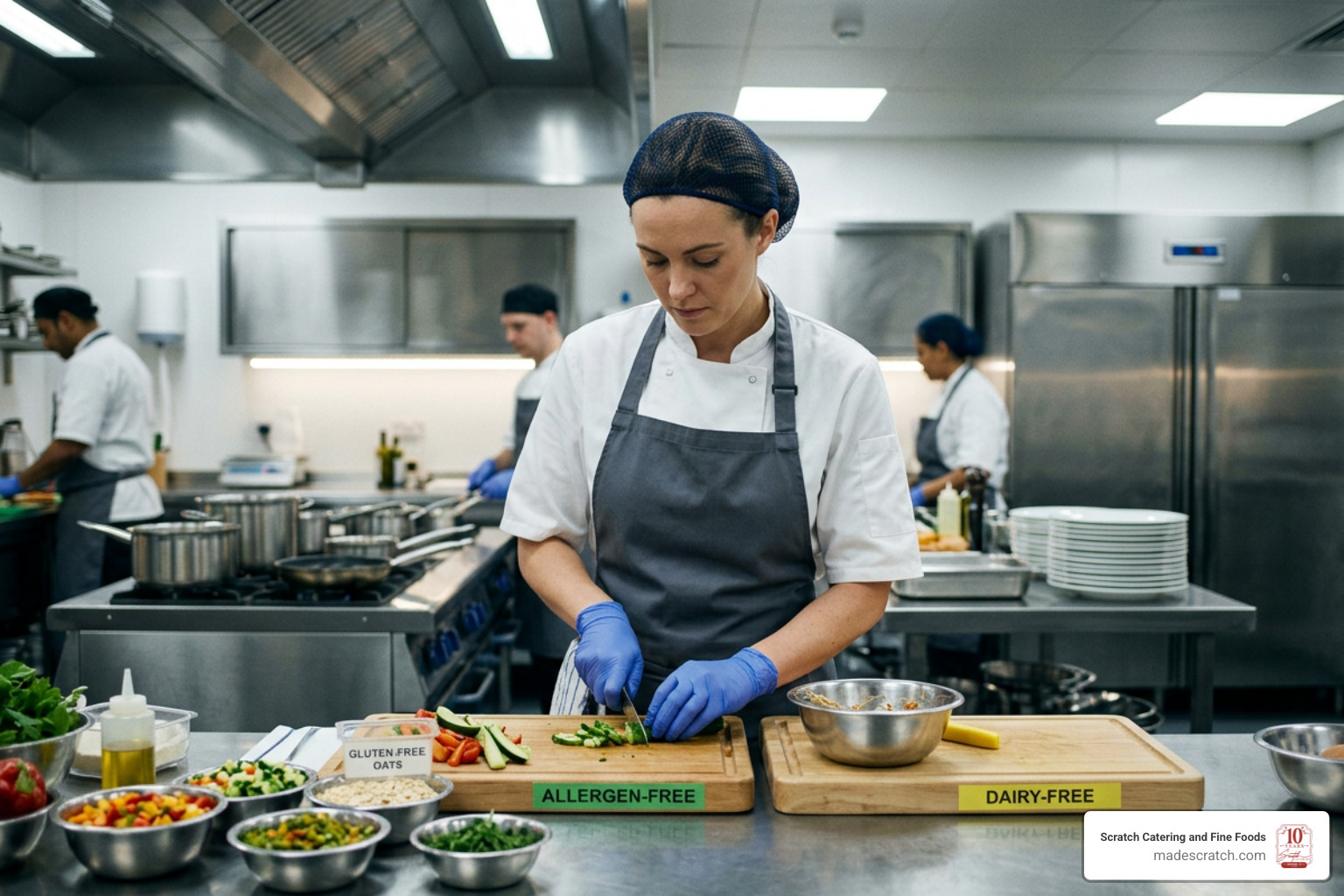
Cross-contact happens when an allergen is accidentally transferred to safe food via shared utensils, fryers, cutting boards, or airborne dust (such as wheat flour). Preventing it requires professional discipline from initial prep all the way to final venue breakdown. At Scratch Catering and Fine Foods, our standard operating procedures treat allergen management with medical-grade seriousness.
Our approach to beyond basic: understanding quality and custom catering services centers on transparent kitchen safety and rigorous team training.
Safe Food Preparation Standards for Allergy Friendly Catering
- Dedicated Prep Zones: Allergen-free meals are prepared before standard items on sanitized, isolated stainless prep stations to avoid airborne particulate contamination.
- Color-Coded Equipment: We utilize dedicated cutting boards, knives, sauté pans, and cookware reserved exclusively for allergen-safe execution.
- Ingredient Verification: Every raw supply batch is vetted for hidden additives, malt extracts, nut oils, or soy fillers. Under the leadership of Chef Teddy B., our culinary team preserves absolute recipe integrity across every catered course.
Buffet Setup, Utensil Controls, and Clear Dish Labeling
Buffet settings present the highest risk of casual guest cross-contact. Mitigating this risk requires thoughtful floor planning, physical separation between allergen-heavy and allergen-free dishes, and clear signage:
| Safety Measure | Traditional Catering Setup | Allergen-Safe Catering Standard |
|---|---|---|
| Utensil Management | Shared tongs across neighboring chafers | Dedicated, color-coded serving utensils anchored to individual dishes |
| Dish Labeling | Generic names (e.g., “Mixed Salad”) | Complete ingredient callouts (e.g., “Dairy-Free, Nut-Free, Gluten-Free”) |
| High-Risk Guest Meals | Placed directly on the open buffet | Individually boxed or plated in a sealed dish delivered from the kitchen |
| High-Risk Ingredients | Toasted nuts/cheeses pre-mixed into dishes | Served in isolated side bowls with dedicated spoons |
| Staff Oversight | General floor servers | Dedicated dietary captains briefed on full allergen matrices |
Clear labeling—aligned with modern food safety transparency frameworks and allergen notification practices—ensures no guest has to guess what is in their food.
Frequently Asked Questions About Event Food Allergies
Does customizing a menu for severe food allergies increase total catering costs?
Customizing for dietary needs does not automatically cause prices to jump. Costs are driven by specialty raw ingredients (such as cold-pressed nut-free seed oils or certified gluten-free flours) and the extra labor required to run isolated prep lines. Scratch Catering and Fine Foods provides upfront, itemized proposals so hosts can manage their budgets while keeping their guests safe.
How far in advance should dietary-restricted catering be booked?
We recommend locking in your menu at least 4 to 6 weeks before your event date. This window gives us sufficient time to source verified ingredients from trusted local purveyors across the DFW Metroplex, complete any requested tastings, and build custom prep schedules.
Can a caterer accommodate multiple severe dietary restrictions simultaneously?
Yes. A single event can easily accommodate celiac, nut-free, vegan, and dairy-free requirements. We accomplish this by designing a base menu that is naturally allergen-light, while preparing individually sealed, labeled plated meals for guests with severe or complex allergies.
Conclusion
Providing an exceptional culinary experience means ensuring that every guest—regardless of dietary restrictions—feels respected, valued, and safe. When you replace processed convenience mixes with fresh, scratch-made food and strict kitchen safety standards, event dining becomes worry-free for everyone in attendance.
From corporate retreats in McKinney and Frisco to formal galas in Fort Worth and Dallas, Scratch Catering and Fine Foods delivers customized event food without cutting corners on safety. When you are ready to start planning your next gathering with our premier wedding caterer DFW team, reach out to design a safe, delicious menu that your guests will love.

