

What Farm to Table Really Means (And Why DFW Couples Are Choosing It)
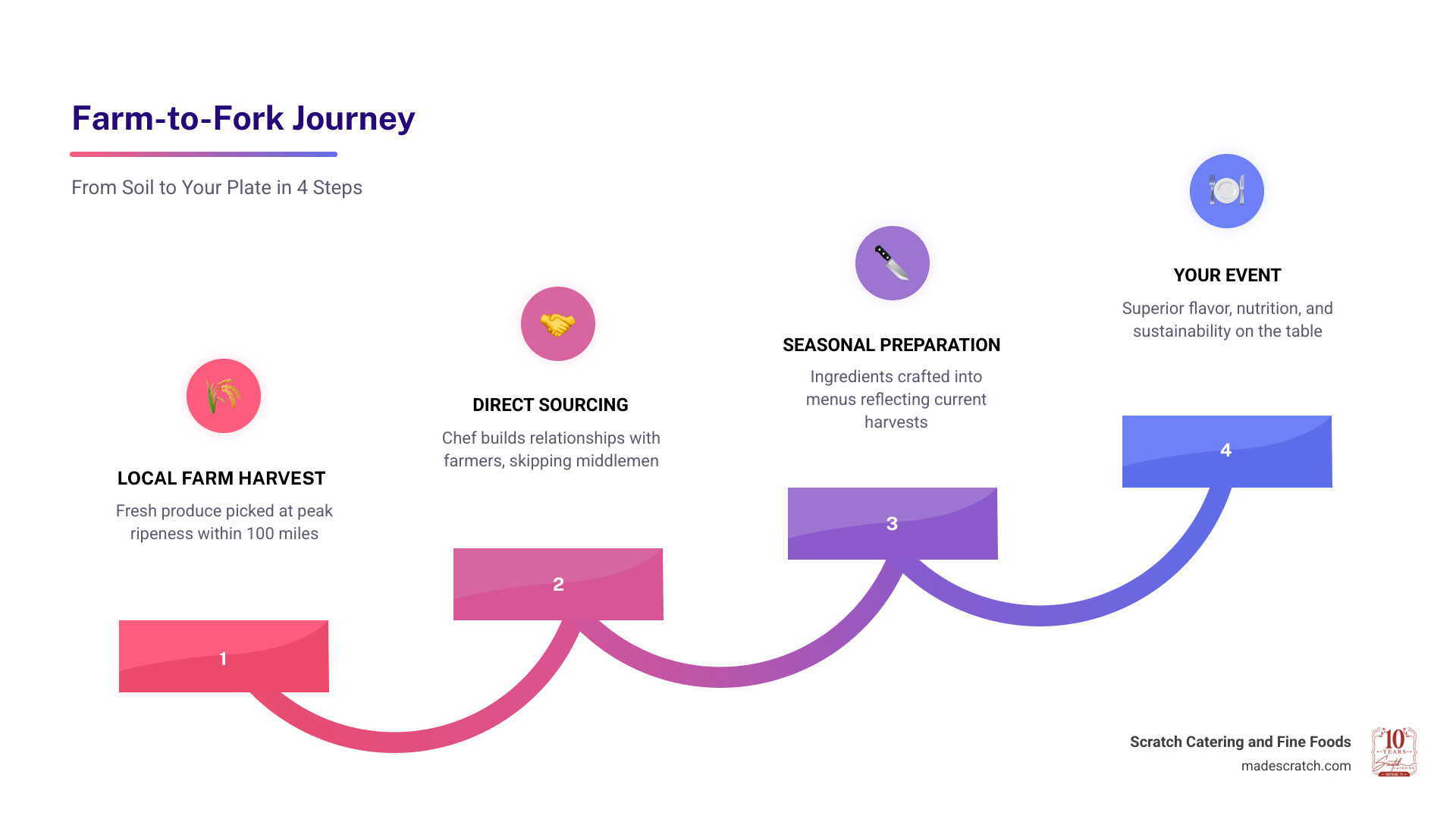
Farm to table is a food philosophy where ingredients go directly from local farms to your plate — no long-haul trucks, no industrial processing, no mystery middlemen.
Here’s the quick version of what it means for your event:
| What It Is | What It Means for You |
|---|---|
| Local sourcing (typically within 100 miles) | Fresher ingredients, better flavor |
| Seasonal menus | Dishes that reflect what’s actually growing right now |
| Direct farm relationships | Full transparency on where your food comes from |
| Fewer intermediaries | Shorter supply chain, less waste |
| Sustainable practices | Lower environmental footprint for your event |
Planning a wedding or special event is already a lot. But more couples in the Dallas-Fort Worth area are asking a new question alongside “what’s on the menu?”: where does this food actually come from?
That shift isn’t just a trend. A full 34% of consumers say sustainability significantly influences their food decisions. And it makes sense — the food at your event tells a story about your values just as much as the flowers or the venue.
The farm-to-table movement started as a quiet rebellion against industrialized food in the early 1970s. Today, it’s a mainstream expectation for couples who want their wedding or celebration to feel real — rooted in place, season, and craft.
At Scratch Catering and Fine Foods, that philosophy isn’t a marketing label. It’s the foundation of how they cook.
This guide walks you through everything you need to know about farm-to-table catering in DFW — from spotting the real thing to planning a seasonal menu your guests will actually remember.
Related content about farm to table:
The Roots of the Farm to Table Movement

To understand why farm to table is such a big deal in Southlake, Dallas, and Fort Worth today, we have to look back at where it all began. While it might feel like a modern buzzword, the movement was born out of a 1970s culinary rebellion against the rise of industrial agriculture and fast food.
The pioneer most often credited with sparking this change is Alice Waters. In 1971, she opened Chez Panisse in Berkeley, California. Inspired by the vibrant local markets she experienced in France, Waters wanted to bring that same level of food traceability and freshness to the American table. She prioritized finding local farmers who cared about the soil as much as the harvest, effectively pioneering sustainable dining long before it was fashionable.
Since then, the movement has grown into a global social shift. We’ve seen world-renowned establishments like Blue Hill at Stone Barns and the regenerative practices at Single Thread Farm set the gold standard for what happens when a kitchen and a farm operate as one ecosystem. These pioneers proved that when you know exactly who grew your carrots or raised your poultry, the flavor is incomparable.
At its core, the history of local food systems is about reclaiming the connection between the person who grows the food and the person who eats it. In a world of centralized, anonymous food production, farm to table offers a return to transparency.
Why Sustainable Sourcing Matters for Your Big Day
When we talk about “sustainability” for a DFW wedding, we aren’t just talking about recycling programs. We’re talking about the tangible impact of your menu. Did you know that local food systems can decrease food miles by up to 80%? Instead of ingredients traveling thousands of miles in refrigerated trucks, they travel a short distance from a North Texas farm to our kitchen.
This choice has a massive ripple effect:
- Flavor Profile: Vegetables harvested at peak maturity retain more nutrients and natural sugars. A tomato picked this morning in McKinney tastes vastly different than one ripened in a shipping container.
- Nutrient Density: Minimal transport means less time for vitamins to degrade. Your guests aren’t just eating delicious food; they’re eating the most healthful version of it.
- Small Farm Economics: By choosing farm to table catering, you are directly investing in the DFW local economy. Your wedding budget helps keep local family farms viable.
- Carbon Footprint: You can actually calculate your carbon footprint to see the difference. Reducing transport emissions is one of the fastest ways to make an event more eco-friendly.
| Feature | Local Supply Chain | Industrial Distribution |
|---|---|---|
| Average Distance | Under 100-200 miles | 1,500+ miles |
| Traceability | Direct to the farmer | Multiple middlemen/warehouses |
| Harvest Time | At peak ripeness | Often picked green for transport |
| Variety | Heirloom and delicate breeds | Durable, standardized breeds |
| Economic Impact | Stays in the local community | Distributed to global corporations |
The Environmental Impact of Farm to Table Dining
Beyond the plate, the farm to table model is a powerhouse for environmental health. Agriculture was responsible for roughly 10.5% of greenhouse gas (GHG) emissions in the EU in 2022, and similar pressures exist globally. By sourcing locally, we reduce the demand for the high-intensity logistics that drive these emissions.
Furthermore, local farmers often employ better soil health practices and pesticide reduction strategies compared to industrial monocultures. This protects biodiversity and conserves water—critical issues for our Texas landscape. The EU Farm to Fork Strategy has even set ambitious targets to reach 25% organic land by 2030, highlighting how important this shift is on a global scale. When we work with local producers, we also see a massive reduction in food waste because ingredients spend less time in transit and arrive fresher, lasting longer in the kitchen.
Navigating the Challenges of Seasonal Menus
We’ll be honest: eating seasonally in Texas requires a bit of flexibility. You can’t always have fresh raspberries in December or local asparagus in August. This is one of the primary challenges of the farm to table model. Because we rely on the rhythm of the earth, menus must be adaptable.
Sometimes, this leads to a roughly 30% cost increase compared to buying from mainline industrial vendors. Why? Because small-scale farming is labor-intensive, and you are paying for quality over quantity. However, the payoff is menu differentiation. Instead of the same “chicken or beef” options seen at every wedding, you get access to heirloom varieties and unique ingredients that aren’t available through standard distributors.
At Scratch Catering and Fine Foods, we embrace this through our Pasture Grazing menus. We look at what’s looking amazing in the fields today and build the menu around that. If a farmer calls with a bumper crop of sweet corn or sun-ripened peaches, that becomes the star of the show. This approach builds supply chain resilience; we aren’t dependent on a single global distributor but on a network of passionate local producers.
Sourcing Farm to Table Ingredients in Practice
How does this actually work on a Tuesday morning in Southlake? It starts with direct relationships. Scratch Catering and Fine Foods doesn’t just click “order” on a website. We communicate with farmers, ranches, and fisheries to see what is at its peak harvest maturity.
In some cases, we work through farm cooperatives. These groups allow multiple small farms to pool their resources, giving us a wider variety of bespoke ingredients in one delivery. Whether it’s ethical dairy from La Lémance or organic vegetables from a local collective, the goal is always the same: quality without compromise.
Our gourmet catering success stories are built on these partnerships. When Chef Teddy B. sources a specific breed of poultry or a rare heirloom squash, it allows us to create a menu that is truly one-of-a-kind for your DFW event.
How to Spot Authentic Farm to Table Catering
As the popularity of “local” food grows, so does “greenwashing”—the practice of making something sound more eco-friendly than it actually is. You might see a “Farm to Fable” situation where a restaurant claims to source locally but actually buys from the same giant trucks as everyone else.
To identify authentic local food, you have to look for menu transparency. An authentic caterer won’t just say “local chicken”; they’ll tell you which farm it came from.
At Scratch Catering and Fine Foods, we take pride in our Scratch Kitchen Southlake standards. When you meet Chef Teddy B, you’re meeting someone who understands that “scratch-made” starts in the soil.
Verification Questions to Ask Your Caterer:
- “Which local farms do you currently partner with?”
- “How often does your menu change based on the season?”
- “Can you tell me the origin of the protein on this menu?”
- “Do you use any heirloom varieties or heritage breeds?”
Identifying Authentic Farm to Table Restaurants
If you’re out dining in Plano, Frisco, or Dallas and want to test the waters, look at the staff. In a true farm to table establishment, the servers and chefs should have a high level of expertise regarding the ingredients. They should be able to tell you if the sea urchin was sourced locally or if the greens came from a specific hydroponic farm in the DFW area.
Authentic spots often have daily menu shifts and will prominently feature farm names on their chalkboards or websites. They typically aim for a 100-mile sourcing radius for their primary produce. If you see “fresh local strawberries” on a menu in North Texas in January, that’s a red flag! Seasonality is the ultimate truth-teller in this industry.
Frequently Asked Questions about Sustainable Dining
Is farm-to-table catering more expensive for weddings?
It can be. Because you are bypassing industrial shortcuts, you may see premium pricing—often around 30% higher than conventional catering. However, this reflects the true cost of ethical farming and superior quality. At Scratch Catering and Fine Foods, we believe the value-based ethics and the explosive flavor of the food justify the investment. We also find ways to manage costs by using “seasonal gluts”—when a certain crop is abundant and at its most affordable—to create catering for special events that is both high-end and sensible.
How can I support the movement at home?
You don’t have to wait for a wedding to eat sustainably! The best way to support the movement in DFW is to visit your local farmers’ markets in places like Grapevine, McKinney, or Dallas. Talk to the producers. You can also join a Community Supported Agriculture (CSA) program, which delivers a box of seasonal produce to your door every week. Even starting a small herb garden in your kitchen window helps you connect with the process of growing food. Supporting local producers ensures these farms stay in business for generations to come.
What role does seasonality play in menu planning?
Seasonality is everything. It provides “creative limitations” that force chefs to be more innovative. Instead of relying on the same old ingredients year-round, we celebrate bumper crops. This ensures your guests are getting peak nutrition and the best possible taste. Whether it’s fresh food and desserts made with summer berries or hearty root vegetables in the winter, the season dictates the soul of the dish.
Conclusion
Choosing farm to table for your DFW wedding or event is about more than just a meal; it’s about making a choice that tastes better and feels better. It’s a commitment to the DFW local economy and a nod to the craftsmanship of our North Texas farmers.
At Scratch Catering and Fine Foods, Chef Teddy B and our entire team are dedicated to this mission. We believe that when you start with the best local ingredients and prepare them from scratch, you don’t need fancy tricks—the quality speaks for itself. As you plan your big day, we invite you to explore the difference that sustainable, intentional cooking can make.
Ready to bring the best of the Texas harvest to your celebration? Discover the possibilities of wedding catering Dallas couples trust with Scratch Catering and Fine Foods, and let us help you tell your story through the local flavors of the land we call home.

