

Ready to Eat Meals: What They Are and How to Choose the Best Option
Ready to eat meals are fully prepared foods that require little to no cooking before serving — open the container, heat if desired, and eat.
Here’s a quick breakdown to help you decide which type fits your needs:
| Type | Best For | Prep Time | Quality Level |
|---|---|---|---|
| Chef-prepared meals | Events, busy professionals | 0-5 min | High |
| Grocery store prepared foods | Everyday convenience | 2-4 min | Medium |
| Medically tailored meals | Health-specific needs | 2-4 min | Medium |
| MREs (military-style) | Emergencies, outdoor use | 0-5 min | Basic |
| Plant-based ready meals | Vegan/specialty diets | 2-5 min | Medium-High |
Whether you’re planning a corporate event, feeding a crowd, or just getting through a hectic week, the right ready-to-eat option saves time without sacrificing quality.
Think about the last time a packed schedule left no room for meal planning. That’s the problem ready to eat meals solve every day — for busy professionals, event planners, families, and anyone who values their time. The category has expanded far beyond basic convenience food. Today it covers everything from military-grade MREs built for emergencies to gourmet chef-prepared entrées worthy of a dinner party.
The standards have risen too. Many prepared food providers now ban hundreds of artificial preservatives, colors, and sweeteners from their ingredients. Medically tailored meal services are crafting menus guided by registered dietitians. And high-protein, macro-balanced options now rival what you’d find in a restaurant kitchen.
This guide covers everything — types, nutrition, shelf life, reheating, and how to compare your options.
I’m Ted Bilsky, founder of Scratch Catering and Fine Foods, and after more than a decade of crafting meals that bring people together — from intimate dinners to large-scale events — I know what separates a forgettable ready to eat meal from one that genuinely impresses. I’ll bring that perspective to every recommendation in this guide.
Discover more about Ready to eat meals:
What Are Ready to Eat Meals?
To truly appreciate the value of ready to eat meals, we have to look at how they have redefined modern dining. At its core, a ready-to-eat meal is a fully cooked dish that requires zero culinary assembly. Unlike meal kits that send you raw, pre-portioned ingredients to chop and cook, these meals arrive at your door or table fully assembled. They are designed to bridge the gap between the speed of fast food and the wholesomeness of a home-cooked meal.
As we navigate June 2026, the food industry has witnessed a massive shift in how these meals are produced. Gone are the days when “prepared food” automatically meant a sodium-heavy, shelf-stable block of mystery meat. Today, the focus is firmly on freshness, culinary integrity, and smart packaging. Modern consumers view these dishes as convenient meal solutions that fit seamlessly into high-performance lifestyles. Whether it is a busy Tuesday night in Plano or a corporate luncheon in Fort Worth, having access to effortless ready-to-serve food has become a lifestyle standard.
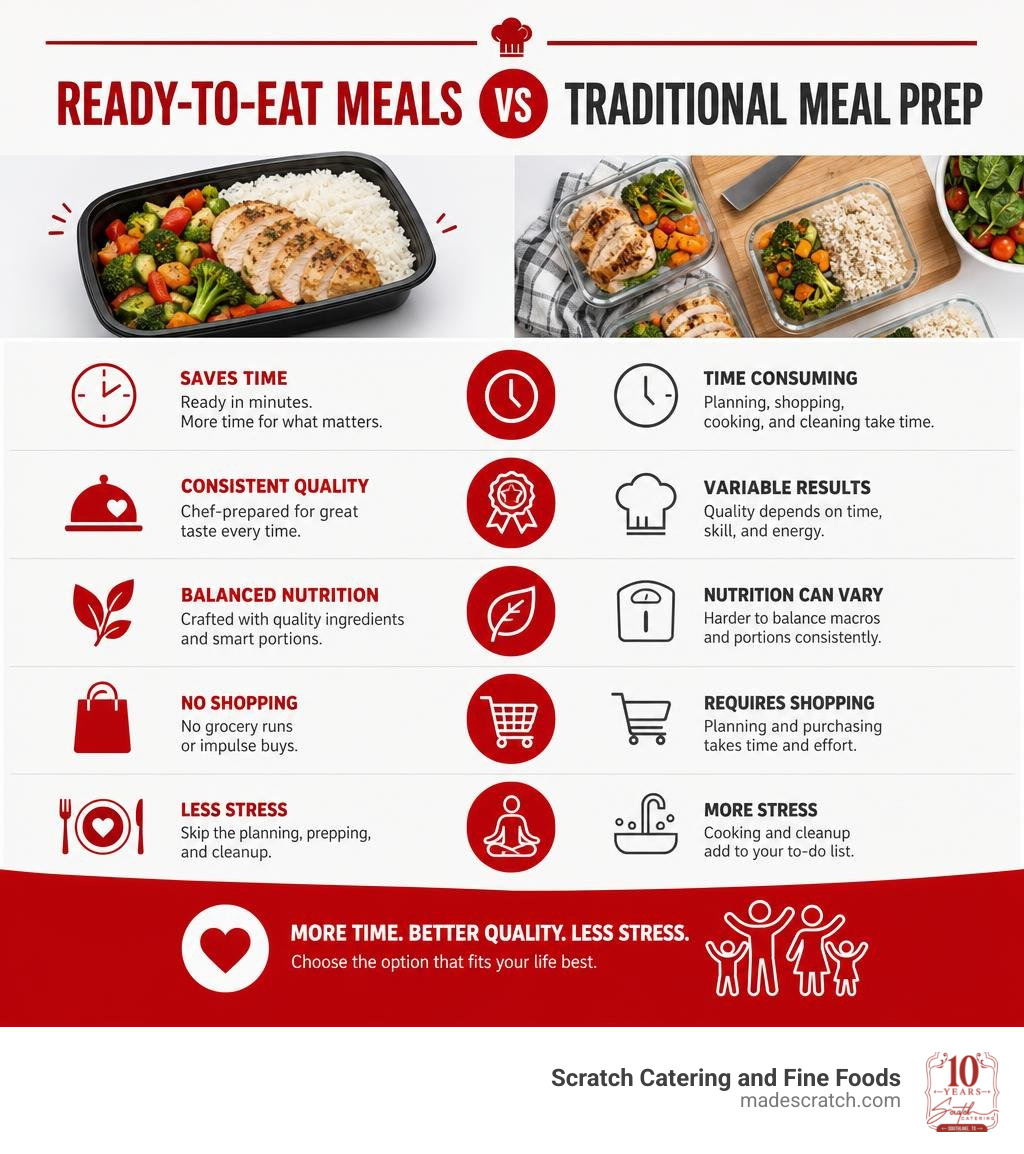
To understand where they sit in the culinary landscape, let’s compare them directly to traditional cooking across three key pillars:
| Feature | Ready to Eat Meals | Traditional Cooking |
|---|---|---|
| Preparation Time | 0 to 5 minutes | 45 to 90 minutes (including cleanup) |
| Skill Required | None (simple reheating) | Intermediate to advanced culinary skills |
| Ingredient Waste | Zero waste (pre-portioned) | High (leftover raw ingredients, unused produce) |
| Quality & Consistency | High and predictable | Variable based on cook’s experience |
| Customization | Chosen at ordering | High, but requires extra shopping and effort |
Defining Ready to Eat Meals vs. Traditional Meal Prep
Traditional meal prep is often heralded as the ultimate way to stay healthy and save time, but anyone who has spent an entire Sunday afternoon chopping vegetables, roasting chicken breasts, and washing a mountain of plastic containers knows it comes with a steep time tax. By Wednesday, those identical containers of dry chicken and broccoli in your fridge can start to look incredibly unappealing.
Choosing ready to eat options eliminates this kitchen fatigue. Instead of spending hours planning, grocery shopping, cooking, and cleaning, you simply select your menu and let professional chefs handle the labor. This is not just about saving thirty minutes at dinnertime; it is about reclaiming your entire evening. For professionals in Arlington or busy families in Grapevine, this transition transforms dinner from a stressful chore into a relaxing, highly anticipated part of the day.
The Evolution of Prepared Food in 2026
The year 2026 has brought incredible advancements to the prepared food space. Historically, food manufacturers relied heavily on high-heat sterilization and heavy preservatives to keep meals shelf-stable, which frequently degraded the texture of vegetables and left proteins feeling rubbery.
Today, advanced packaging technologies—such as modified atmosphere packaging (MAP) and rapid-chilling systems—allow fresh meals to retain their vibrant colors, crisp textures, and optimal nutrient profiles without relying on artificial additives. At the same time, consumer demand has pushed major grocery brands and boutique caterers alike to elevate their ingredient standards. Today’s market demands clean labels, ethically sourced proteins, and restaurant-quality flavors that can be enjoyed in the comfort of your own home or office.
Types of Prepared Meals and Dietary Options
The market for prepared meals has diversified to accommodate almost every imaginable lifestyle, dietary restriction, and occasion. Whether you are looking for single-serving macro-balanced fuel to power your workouts, a medically tailored plan to manage a health condition, or an elegant family-style feast for a special event, there is a ready-to-eat category designed specifically for you.
Chef-Prepared and Gourmet Options
When you want to elevate your daily dining or host an event that leaves a lasting impression, chef-prepared options represent the pinnacle of the ready-to-eat market. These meals are crafted by professional culinary teams who prioritize flavor balance, seasonal ingredients, and beautiful presentation.
At Scratch Catering and Fine Foods, led by our award-winning chef Teddy B., we specialize in creating gourmet ready-to-serve holiday meals and daily menus designed for easy pickup and reheating across the Dallas-Fort Worth metroplex.

Choosing chef-prepared options allows you to experience fine dining at home without the stress of cooking or the chore of cleaning up. For residents seeking the best Dallas prepared meals, these services offer an incredible alternative to restaurant dining.
If you are looking for structured, premium options in the DFW area, you can explore specialized services like Prepared Meals Dallas or sign up for a premium daily meal service to keep your nutrition on track.
Plant-Based and Specialty Ready to Eat Meals
The demand for specialty diets has driven incredible innovation in the plant-based ready-to-eat sector. Vegetarian and vegan meals are no longer afterthought side dishes; they are now complex, protein-rich main courses designed to satisfy both plant-based eaters and carnivores alike.

For example, products like UnMeat Meatballs in Spaghetti Sauce | Plant-Based Ready Meal – Loma Linda showcase how classic, comforting Italian favorites can be successfully reimagined into fully plant-based, cholesterol-free options that don’t compromise on flavor or texture.
In addition to plant-based options, the specialty market has expanded to include certified gluten-free, dairy-free, low-sodium, and allergen-safe prepared meals. This makes it easier than ever to safely host guests with diverse dietary needs at corporate events or family gatherings without having to cook multiple separate menus from scratch.
Nutritional Standards, Shelf Life, and Preparation
One of the most common misconceptions about prepared meals is that they are inherently less nutritious than meals cooked from scratch. While this may have been true of older generations of frozen dinners, modern culinary standards and food safety regulations have raised the bar significantly.
Ingredient Quality and Nutritional Value
Today’s premium ready-to-eat meals are designed with nutritional integrity in mind. Reputable culinary providers focus on “clean label” ingredients, avoiding artificial colors, high-fructose corn syrup, and hydrogenated oils. For instance, leading natural grocery standards now prohibit more than 300 common preservatives and additives from their prepared food departments, ensuring that what you eat is as close to whole food as possible.
For those tracking specific macronutrients, many prepared meals are designed with precise protein, carbohydrate, and fat ratios. This is highly beneficial for athletes or individuals managing specific health goals. For example, high-protein options like the Robot or human? garlic herb grilled chicken bowl provide a balanced, macro-friendly option that takes the guesswork out of healthy eating. When choosing your meals, always review the sodium levels and look for options that prioritize lean proteins, complex carbohydrates, and fiber-rich vegetables.
Storage, Longevity, and Reheating Best Practices
To enjoy your prepared meals at their absolute best, proper storage and reheating are essential. Most fresh, chef-prepared meals are designed to be kept refrigerated and consumed within three to five days of preparation.
When it comes to reheating, the goal is to warm the food thoroughly while preserving its original texture and moisture. For classic comfort dishes, such as a glazed Save on Giant Freshly Made Meal Meatloaf Order Online Delivery | Giant , a great tip is to slice the meatloaf in half lengthwise before microwaving to ensure even heat distribution.
Here are some general best practices for reheating prepared meals:
- The Microwave Method: Best for quick lunches. Partially peel back a corner of the container’s lid to let steam escape, then heat on high for 2 to 3 minutes. Let the meal rest for 1 to 2 minutes before eating to allow the heat to distribute evenly.
- The Oven Method: Best for maintaining crispy textures. Transfer the food to an oven-safe dish, cover with foil to retain moisture, and heat at 325°F for 12 to 15 minutes.
- The Stovetop Method: Ideal for sauces, stews, or stir-fries. Transfer the meal to a skillet, add a tablespoon of water or broth, and heat over medium-low heat while stirring gently.
- Food Safety: Always ensure that your reheated meals reach a safe internal temperature of 165°F before serving.
Frequently Asked Questions About Prepared Meals
Navigating prepared meals often comes with a few practical questions. Here are the answers to some of the most common queries we hear from our clients in Southlake, McKinney, and across the DFW area.
How long do ready-to-eat meals last in the fridge?
Most fresh, non-frozen ready-to-eat meals will keep safely in your refrigerator for 3 to 5 days from the date they were prepared. Always check the packaging for a specific “use-by” or “best-by” date. If you realize you won’t be able to eat a meal within this window, many fresh prepared meals can be frozen directly in their original packaging for up to three months. To enjoy them later, simply thaw them overnight in the refrigerator before reheating.
Are prepared meals healthier than takeout?
In almost all cases, yes. Restaurant takeout is notoriously high in sodium, butter, and hidden sugars, which are often used to artificially enhance flavor and keep food warm for long periods. Premium prepared meals, on the other hand, are portion-controlled and designed with balanced nutrition in mind. Because they are packaged immediately after cooking, they don’t require the excessive fats and salt typically found in standard restaurant delivery.
How do I safely reheat chef-prepared meals?
The safest and most effective way to reheat chef-prepared meals is to follow the specific instructions on the label, as different proteins and sides react differently to heat. As a general rule, always ensure the meal reaches an internal temperature of 165°F. If you are heating a meal with multiple components (such as a steak with a side salad), remember to remove any cold components or sauce cups from the tray before heating the main entrée.
Conclusion
The rise of high-quality ready to eat meals has fundamentally changed how we approach busy weekdays, family dinners, and event hosting. You no longer have to choose between a stressful evening spent cooking from scratch or settling for greasy, uninspiring fast food. By integrating premium prepared meals into your routine, you gain the ultimate luxury: time, without ever having to compromise on flavor, nutrition, or quality.
At Scratch Catering and Fine Foods, we believe that convenience should still taste like fine dining. Whether you are hosting a holiday gathering in Southlake, coordinating a corporate luncheon in downtown Dallas, or looking for gourmet daily meals to streamline your week in Fort Worth, our award-winning chef Teddy B. and our dedicated culinary team are here to exceed your expectations.
Ready to elevate your next meal or upcoming event? Discover how we can bring gourmet convenience straight to your table by visiting Scratch Catering and Fine Foods.

