

Why Micro Wedding Venues Are Worth a Closer Look
Micro wedding venues are built for celebrations with roughly 10 to 50 guests. Start by setting a firm guest-count cap, then look for a space that feels full and comfortable at that number, supports your ceremony and reception plan, and gives your caterer enough room to serve a memorable meal.
A micro wedding is still a wedding, with vows, dinner, photos, and the people you care about most. It is different from an elopement because guests are present, and different from a traditional wedding because the experience is designed around a much smaller group.
This is not a niche idea anymore. Nearly half of couples are considering a micro wedding, and micro weddings represented 18% of U.S. weddings in 2024, up from 10% in 2013. The appeal is simple: fewer guests can mean more time, attention, and thoughtful hospitality for every person in the room.
For busy couples and planners, the right venue also makes catering, layout, weather planning, and guest flow far easier. Scratch Catering and Fine Foods helps couples turn that smaller scale into a polished, personal celebration.
I’m Ted Bilsky, and the next sections will help you narrow your venue search with confidence.
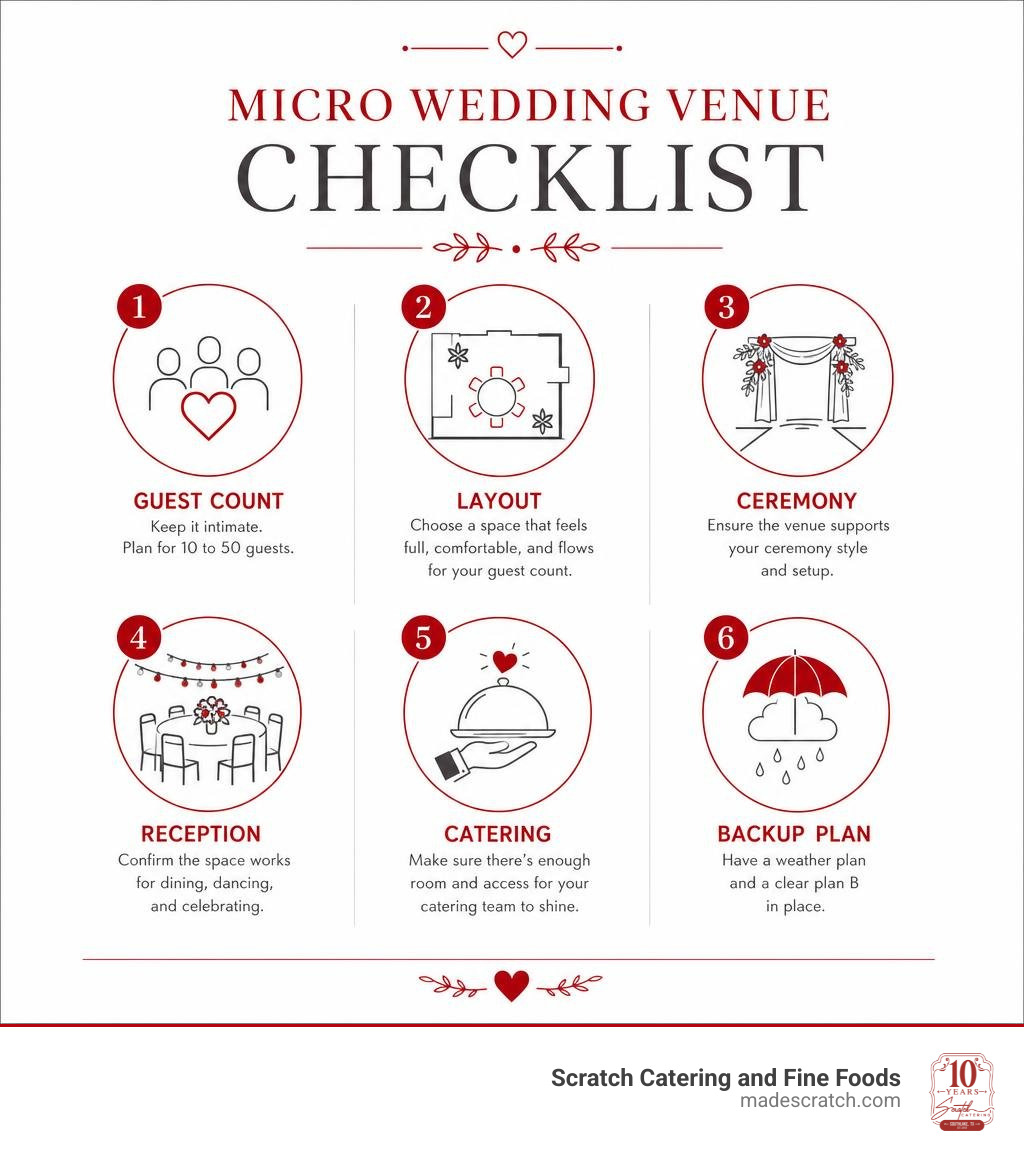
1. Understanding Micro Wedding Venues vs. Elopements and Traditional Spaces
A micro wedding occupies the sweet spot between a spontaneous elopement and an expansive ballroom gala. While an elopement typically involves just the couple (sometimes with an officiant, a photographer, or two close witnesses), a micro wedding preserves all the cherished rituals of a full wedding day on a deeply personal scale. You still wear the dress or suit, walk down an aisle, exchange vows, share a first dance, cut a cake, and toast over a multi-course dinner. The primary distinction is the intentional guest count, usually capped strictly at 50 or fewer attendees.
Unlike large banquet facilities designed to process hundreds of people on an assembly line, boutique intimate spaces are engineered around connection. In traditional ballrooms, newlyweds often spend hours circulating through receiving lines, barely getting three sentences with each guest. In contrast, scaling down allows couples to actually sit, converse, and savor the evening alongside their closest circle.
| Event Feature | Traditional Wedding Venue | Elopement Space | Micro Wedding Venue |
|---|---|---|---|
| Typical Guest Count | 100 to 250+ guests | 0 to 5 guests | 10 to 50 guests |
| Atmospheric Vibe | Grand, theatrical, expansive | Ultra-private, minimal, quiet | Cozy, curated, immersive |
| Timeline Pacing | Fast-paced, rigid schedules | Flexible, brief (1–2 hours) | Relaxed, hospitality-centric |
| Spatial Requirement | 3,000 to 10,000+ sq. ft. | Scenic overlook, office, suite | 600 to 2,000 sq. ft. |
| Culinary Focus | Mass-plated banquet catering | Post-event restaurant dinner | Custom gourmet plated menus |
Defining Guest Counts and Capacity Limits for Micro Wedding Venues
Setting your guest count early protects your event aesthetic. In the wedding industry, a micro wedding strictly stays at 10 to 50 attendees, whereas a “small wedding” generally spans 50 to 75 guests. When you consider that the national average wedding size sits at 117 guests—with regional averages in the Midwest climbing upward of 140 to 160 guests—holding your list to 40 or 50 requires discipline.
Finding spaces specifically suited for these lower caps avoids awkward room proportions. If you are comparing small and micro wedding venues with real pricing data, look closely at minimum and maximum capacities. A space built for 250 will swallow a party of 35, causing the room to feel empty no matter how many floral arrangements you bring in.
Evaluating the Financial and Experiential Benefits of Micro Wedding Venues
Choosing an intimate setting yields massive advantages beyond simple square footage. Couples often see substantial overall savings, frequently cutting total baseline venue overhead down significantly compared to massive ballroom rentals.
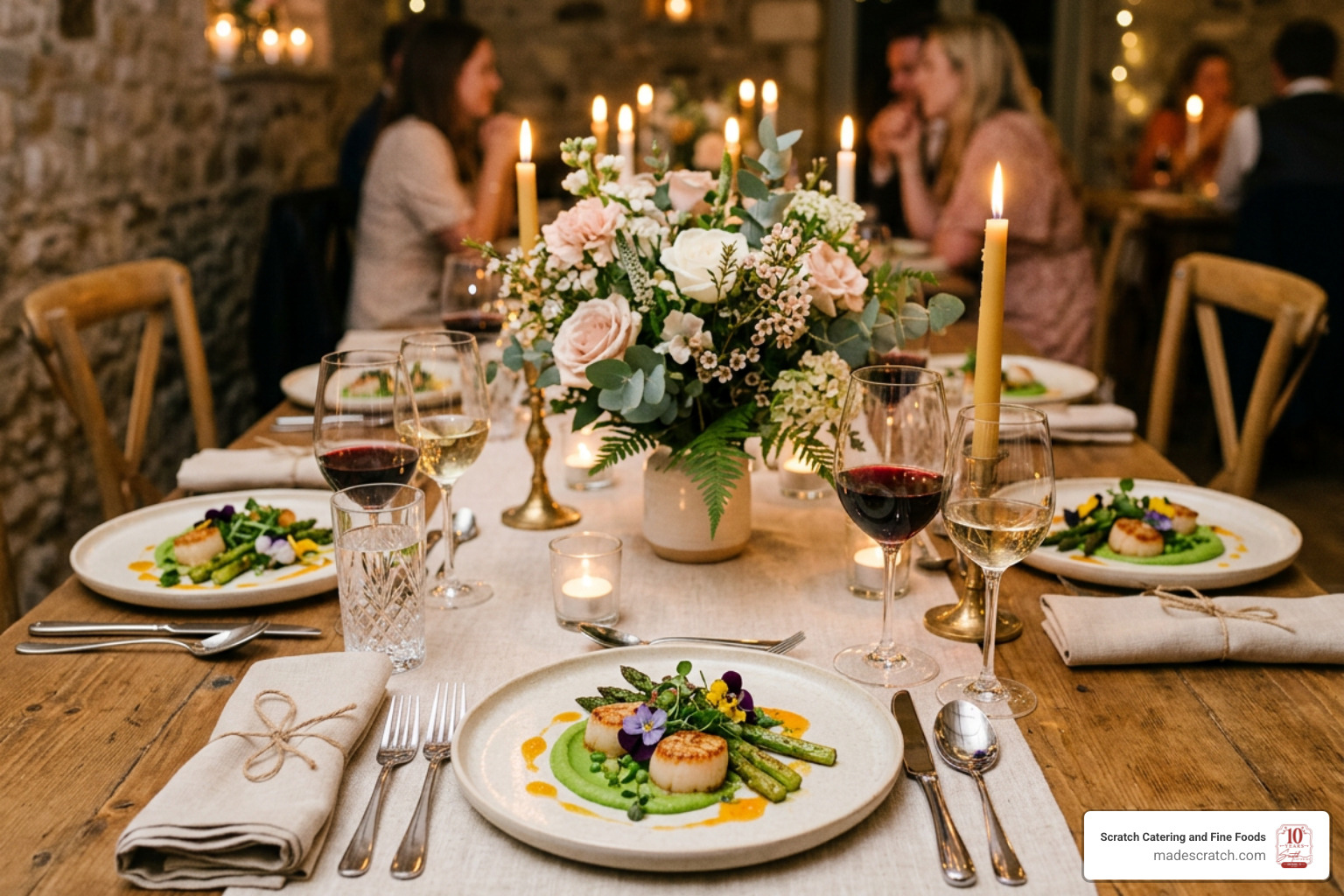
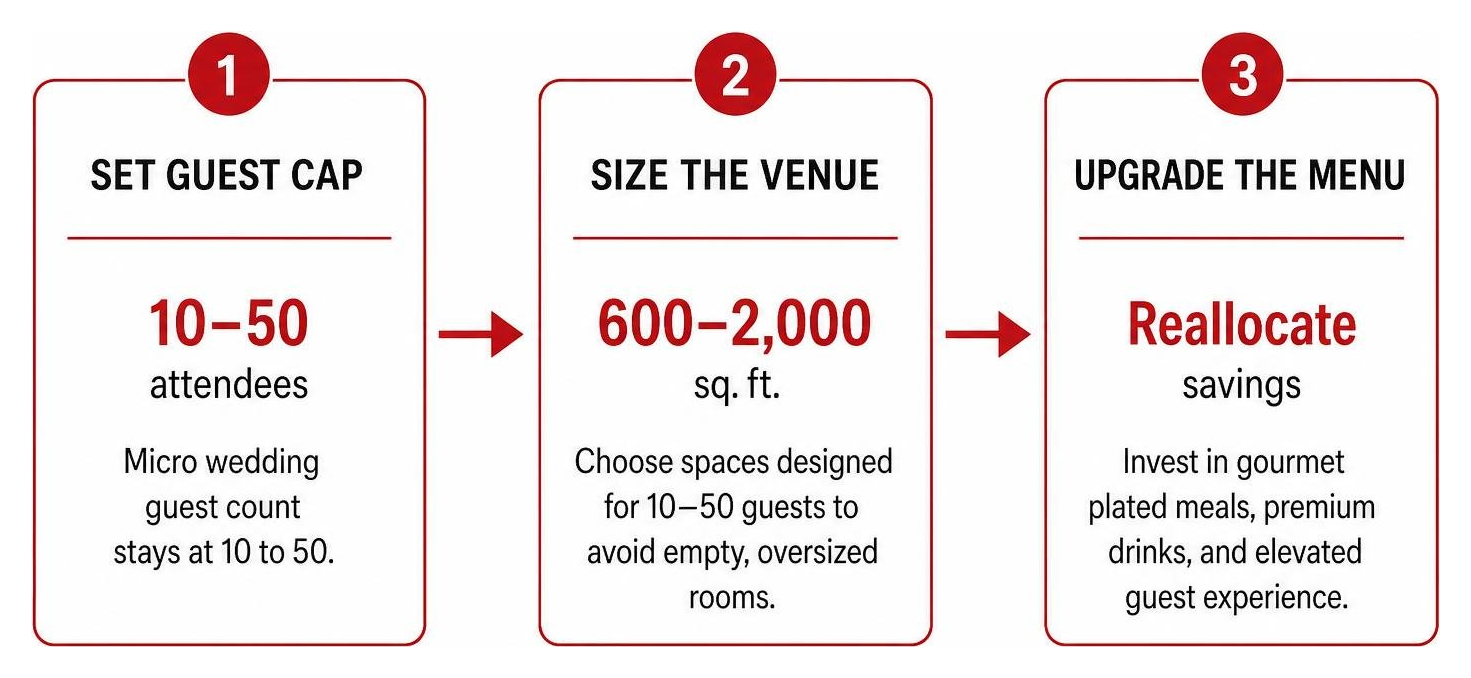
However, rather than pocketing all the savings, modern couples are reallocating those resources where it matters most. Recent industry data shows that 72% of couples rank making guests feel pampered as their top priority. By trimming a 150-person guest list down to 40, your culinary budget transforms. Instead of serving standard chicken breast buffets, you can offer an unforgettable multi-course plated dinner, personalized calligraphed menus, paired vintage wines, and live acoustic music.
2. Exploring Distinct Venue Types for Intimate Weddings
Because small celebrations do not require vast acreage, your venue options expand into architecturally stunning spaces that standard 200-person weddings could never consider.
Historic Lofts, Industrial Spaces, and Private Estates
Urban lofts and converted historic buildings bring unmatched character:
- Exposed Brick & Beams: Natural architectural textures reduce the need for excessive wall decor.
- Pipe and Drape Zoning: In larger lofts, elegant custom draping can divide the space, creating a cozy ceremony nook on one side and a candlelit dinner layout on the other.
- Private Urban Estates: Boutique properties provide residential warmth where guests feel like they are attending a lavish dinner party rather than a commercial reception.
Greenhouses, Conservatories, and Destination Lodges
Botanical settings offer an immersive atmosphere that combines the outdoors with indoor reliability:
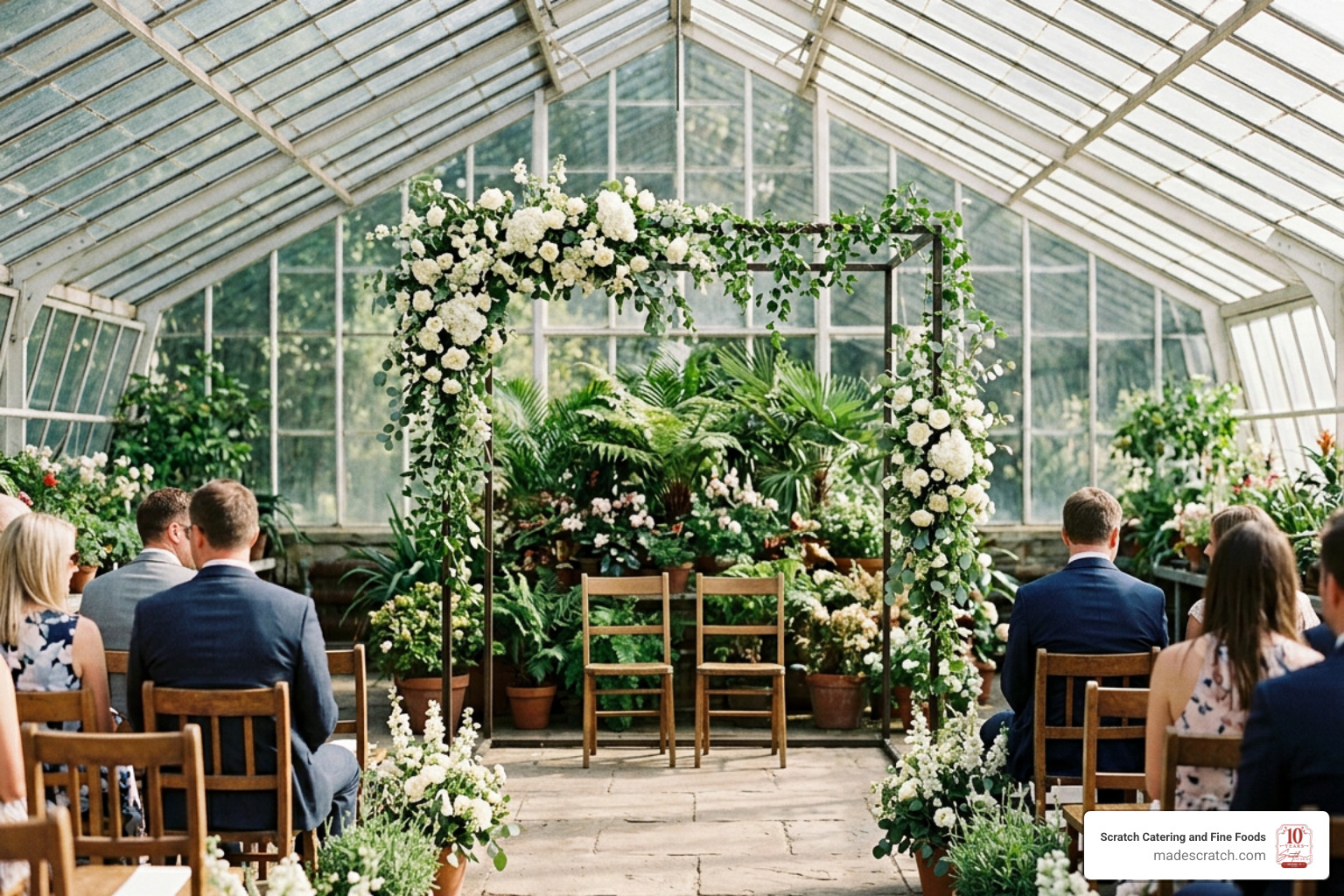
- Natural Light: Soaring glass ceilings flood daytime ceremonies with soft, flattering daylight that photographers love.
- Built-In Florals: Lush exotic plants and tropical greenery minimize your external florist expenses.
- Destination Atmosphere: Whether you look at scenic mountain retreat micro wedding options or a local historic garden atrium, destination-style lodges provide a relaxed, multi-hour retreat for your family.
3. Essential Spatial, Layout, and Vendor Considerations
A smaller space requires precise logistics. When every square foot counts, thoughtful spatial flow ensures your celebration moves smoothly from vows to cocktail hour and seated dining.
Calculating Square Footage to Avoid Empty Room Syndrome
A common pitfall is renting a room that is too large. Empty space dampens energy, scatters conversation, and creates an echo chamber. To establish the right balance:
- Seated Plated Dinners: Plan for 12 to 15 square feet per guest. A 40-person seated dinner thrives in 500 to 600 square feet of dedicated dining floor.
- Cocktail Style Receptions: Plan for 8 to 10 square feet per standing guest.
- Dance Floor & Bar Flow: Keep bars away from tight entryways and ensure the dance floor is proportional so two dozen dancing guests feel like a packed party rather than a sparse circle.
Navigating All-Inclusive Packages vs. Outside Catering Flexibility
Many micro venues offer turnkey, all-inclusive packages that bundle the room, simple florals, and an officiant. While convenient, these packages often restrict your food and beverage choices to basic fixed menus.
Selecting wedding venues in DFW that allow outside catering gives you complete control over your dining experience. At Scratch Catering and Fine Foods, we work alongside couples to design elevated custom wedding menus that reflect their personal tastes. When booking an independent venue, ensure they have adequate staging or prep areas so our wedding catering team can plate your dinner flawlessly on site.
4. Touring Protocols, Contract Vetting, and Booking Windows
Walking through a boutique venue requires a different eye than evaluating a traditional convention hall.
Top Questions to Ask During Your Venue Tour
When visiting intimate event spaces, bring this vetting checklist:
- What are the setup and breakdown windows for outside vendors?
- Is there a separate, private staging area or kitchenette for caterers?
- What are the sound and amplified music restrictions in the neighborhood?
- Are tables, chairs, glassware, and basic linens included, or do they need to be rented?
- Can we schedule private tastings with our chosen caterer before finalizing layouts?
- What is the specific indoor rain plan if an outdoor courtyard is rained out?
Securing Dates and Navigating Reservation Timelines
Intimate spaces tend to book fast because they host non-wedding private events, corporate dinners, and weekend workshops. Aim to book your venue 9 to 12 months in advance for prime autumn and spring weekends. If you are planning on a shorter timeline, consider hosting your celebration on a Thursday, Friday evening, or Sunday afternoon, which opens up prime calendars and offers much more scheduling flexibility.
Frequently Asked Questions About Micro Wedding Venues
How much does a micro wedding venue typically cost?
Venue rental rates vary based on day of the week, location, and included amenities. Standalone boutique room rentals generally charge flat fees ranging from short weekday time slots to full-day weekend access. Spaces that bundle photography, florals, and coordination into all-inclusive packages will price accordingly, while open-vendor spaces charge solely for the room, allowing you to allocate your budget directly to top-tier dining and decor.
Can a micro wedding venue accommodate both ceremony and reception?
Yes. Most micro wedding spaces are masterfully designed for dual-purpose use. Some venues feature separate adjoining spaces (such as an outdoor garden for vows and an indoor gallery for dinner). Others utilize a seamless “room flip” during cocktail hour, where event staff transitions the ceremony seating into a formal dining layout while guests enjoy drinks and hors d’oeuvres.
How far in advance should we book a small wedding venue?
For peak dates in the spring and fall, locking in your date 9 to 12 months ahead is standard practice. However, because micro weddings involve far less vendor coordination and guest travel logistics than 200-person weddings, many couples successfully plan and book gorgeous intimate venues within a 3 to 6-month window.
Conclusion
Planning an intimate celebration allows you to strip away generic wedding traditions and focus purely on meaningful hospitality, authentic conversations, and outstanding food. By matching your guest count to a thoughtfully proportioned space and prioritizing personal touches, you ensure an unforgettable evening for everyone in attendance.
If you are currently evaluating spaces, explore our curated guide to the best small wedding venues in Dallas for your micro wedding. When you are ready to design an extraordinary dining experience tailored specifically to your venue, our team at Scratch Catering and Fine Foods is here to help you bring every delicious detail to life.

