

What Is Event Catering — and How Does It Work?
Event catering is the professional service of preparing, delivering, and serving food and beverages for gatherings of any size — from small office lunches to large weddings and corporate galas.
Here’s a quick overview of what you need to know:
| Topic | Quick Answer |
|---|---|
| What it is | Food and beverage service tailored to a specific event |
| Who it’s for | Weddings, corporate events, private parties, social celebrations |
| Main service levels | Full-service, delivery & setup, drop-off |
| Why use it | Saves time, reduces stress, elevates guest experience |
| When to book | 3–12 months in advance depending on event size |
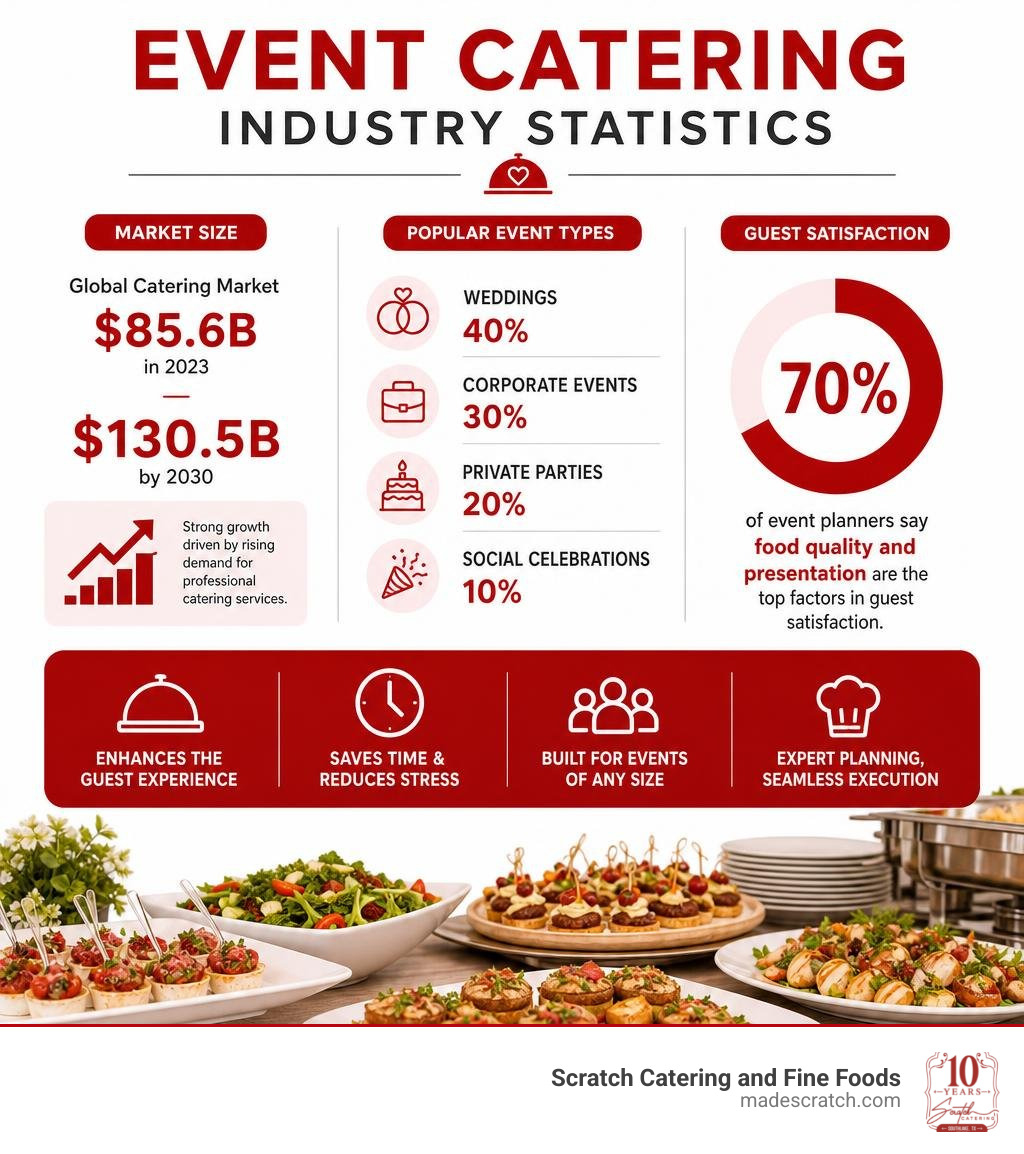
The food at your event matters more than most people realize. Over 70% of event planners say food quality and presentation are the top factors in guest satisfaction. Yet planning a menu, sourcing ingredients, cooking, serving, and cleaning up — while also managing everything else — is a lot to take on alone.
That’s exactly why professional event catering exists.
The global catering market was valued at roughly $85.6 billion in 2023 and is on track to reach $130.5 billion by 2030. That growth reflects something real: more hosts and planners are turning to professionals to make their events memorable.
I’m Ted Bilsky, founder of Scratch Catering and Fine Foods, and I’ve spent over a decade crafting event catering experiences built around scratch-made food, unexpected flavor combinations, and seamless execution. I’ll walk you through everything you need to know to make the right catering decisions for your next event.
Event catering word roundup:
Understanding Event Catering and Service Levels
When you sit down to plan a milestone celebration, corporate summit, or backyard gathering, the food is often the centerpiece of the conversation. But event catering is about far more than just cooking delicious dishes. It is a comprehensive hospitality solution designed to transport restaurant-quality dining to any location of your choosing.
To choose the right options for your gathering, it helps to understand how professional catering differs from standard restaurant dining, the types of events it serves, and the various service levels available to you. For a deeper dive into these fundamentals, you can read our comprehensive Guide to Professional Event Catering.
What is Event Catering?
At its core, event catering is the art and science of feeding a group of people at a specific location, often off-site from where the food is originally prepared. While a restaurant operates within a controlled kitchen environment with a static menu and a predictable flow of guests, a caterer must be highly adaptable.
Catering requires preparing food that can travel well, maintain its optimal temperature, and look beautiful when presented hours after it was cooked. It also involves a high degree of personalization. When you dine at a restaurant, you choose from their menu; when you hire a caterer, we build a menu around your specific vision, theme, and guest demographics.
From a simple corporate breakfast in Plano to an elaborate wedding reception in Southlake, catering transforms the act of eating into a shared, cohesive guest experience.
The Benefits of Professional Event Catering
Trying to coordinate food for a large group on your own can quickly turn a joyful occasion into a stressful logistical puzzle. Hiring a professional service like Scratch Catering and Fine Foods offers several distinct advantages:
- Stress Reduction: Instead of spending your event running back and forth to the kitchen, checking oven timers, and washing dishes, you actually get to be a guest at your own party.
- Food Safety and Logistics: Professional caterers are licensed, insured, and trained in strict food safety protocols. We know how to keep hot foods hot and cold foods cold, preventing foodborne illnesses.
- Polished Presentation: We don’t just cook food; we design the table. From elegant platters to interactive chef stations, the visual appeal of professional catering elevates the entire atmosphere of your venue.
- Scalability: Whether you are hosting 15 executives in a Dallas boardroom or 1,500 guests at a grand gala in Fort Worth, professional caterers have the systems, staff, and equipment to scale seamlessly.
To explore how professional management changes the dynamic of hosting in the Dallas-Fort Worth metroplex, consult our Ultimate DFW Catering Guide.
Service Levels: Full-Service vs. Drop-Off
Catering is not a one-size-fits-all service. Depending on your budget, venue, and the level of formality you want to establish, you will choose from three primary service levels.
Here is a quick comparison to help you understand the differences:
| Service Level | What is Included | Best Suited For | Level of Host Effort |
|---|---|---|---|
| Full-Service | Menu planning, on-site cooking/reheating, professional service staff, bartenders, equipment rentals (china, linens), complete setup, and teardown/cleanup. | Weddings, galas, high-end corporate events, formal private parties. | Zero — The caterer handles everything from start to finish. |
| Delivery & Setup | Food prepared off-site, delivered hot/cold, and set up by catering staff using professional chafing dishes, platters, and serving utensils. | Corporate luncheons, casual social gatherings, holiday parties, graduations. | Minimal — You provide the tables; we set up the spread. You clean up afterward. |
| Drop-Off / Delivery | Food packaged in disposable foil pans or boxed containers, delivered to your door. No setup or service staff included. | Casual team lunches, family picnics, informal home parties. | Moderate — You set out the food, keep it warm, serve your guests, and clean up. |
For formal events, full-service catering is the gold standard. It ensures that every detail—from the timing of the salad course to clearing empty plates—is handled by trained hospitality professionals. If you are leaning toward a formal sit-down meal, you can read more about our plated dinner service options to see if it fits your event’s timeline and style.
Customizing Menus and Accommodating Dietary Needs
One of the most exciting parts of planning an event is designing the menu. The food you serve is an extension of your hospitality, and custom menus allow you to inject personality, theme, and creativity into the culinary experience. However, modern hosting also requires careful attention to the diverse dietary needs of your guests.
At Scratch Catering and Fine Foods, we believe that dietary accommodations should never feel like an afterthought. Every guest should enjoy a meal that is just as thoughtful, flavorful, and beautifully presented as the main menu. To see how we approach this culinary philosophy, take a look at our guide to Custom Catering Menus.
The Power of Themed and Customizable Menus
A great menu does more than satisfy hunger—it sparks conversation and enhances the theme of your gathering. Whether you are planning a rustic Texas BBQ in Grapevine, a sleek mid-century modern cocktail party in Dallas, or a vibrant multicultural fusion menu in Frisco, customizable options allow you to tailor the culinary narrative.
Interactive food stations are an excellent way to drive guest engagement. Instead of a traditional buffet line, imagine:
- A customized street taco station with freshly pressed tortillas and gourmet salsas.
- An artisanal slider bar featuring premium meats, house-made sauces, and brioche buns.
- A luxury grazing table featuring local cheeses, cured meats, and fresh seasonal fruits.
These interactive elements break the ice, encourage movement, and allow guests to customize their plates to their exact liking.

Navigating Dietary Restrictions and Allergies
In 2026, accommodating dietary preferences and medical restrictions is standard practice for any successful event. When planning your menu, you must account for:
- Food Allergies: Celiac disease (strict gluten-free), nut allergies, shellfish allergies, and dairy intolerances require strict cross-contamination protocols in the kitchen.
- Lifestyle Preferences: Vegetarian, vegan, keto, and paleo diets are increasingly common.
- Cultural and Religious Guidelines: Halal, Kosher, or specific cultural culinary traditions.
To handle these seamlessly, we recommend asking guests to indicate any dietary restrictions on their RSVP cards. Once you have this data, work closely with your caterer to build a menu that naturally accommodates these needs. For example, opting for a menu that is naturally gluten-free or dairy-free (using olive oils and fresh herbs instead of heavy creams) reduces the need to prepare separate, isolated meals.
If you are planning an event in Collin County, you can research local preferences and vendor reviews via local catering options in McKinney to see what styles are trending nearby.
Planning, Booking, and Cost Factors for Event Catering
Behind every successful catered meal is a detailed timeline and a clear financial plan. Understanding how the booking process works and what factors influence your final invoice will help you budget effectively and avoid last-minute surprises.
Whether you are organizing a wedding or coordinating Corporate Event Catering, early preparation is your best tool for securing the best culinary team.
How Far in Advance Should You Book Event Catering?
Catering companies, especially those with dedicated chefs and custom menus, have limited capacity. During peak seasons in the DFW metroplex—such as spring wedding season (April to June) and the winter holiday rush (November and December)—dates book up incredibly quickly.
Here is a recommended booking timeline:
- Weddings (6 to 12 Months): Your caterer is one of the most critical vendors for your big day. Book early to secure your date, then refine your guest count and menu choices as the date approaches. For a step-by-step planning timeline, check out our Ultimate Wedding Catering Guide.
- Large Corporate Events & Galas (3 to 6 Months): Large-scale conferences, annual fundraisers, and holiday galas require significant coordination, especially if you need custom branding, specialized equipment, or venue-specific logistics.
- Private Parties & Social Gatherings (1 to 3 Months): For birthdays, anniversaries, and graduation parties, a few months’ notice is typically sufficient, though holiday weekends may require more lead time.
Understanding Catering Costs and Quotes
When you receive a catering proposal, it is often structured as a multi-page document outlining several distinct cost categories. Understanding these components will help you compare quotes accurately:
- Food Cost (Per-Person or Platter Pricing): This is the base cost of the ingredients and culinary preparation. It varies widely depending on the proteins chosen (e.g., prime rib vs. chicken breast) and the complexity of the dishes.
- Staffing Fees: This covers the hourly wages of the chefs, kitchen assistants, servers, and bartenders working your event. Full-service events require a higher staff-to-guest ratio to ensure smooth service.
- Equipment Rentals: If your venue does not provide tables, chairs, linens, china, glassware, or flatware, your caterer can coordinate these rentals for you.
- Service Charge: Often confused with a gratuity, the service charge (typically 18% to 22%) covers administrative costs, liability insurance, transport vehicle maintenance, and behind-the-scenes event coordination.
- Taxes: Local and state sales taxes are applied to food, beverage, and physical rental items.
Before booking, make sure to review any venue-specific catering guidelines. For instance, if you are hosting an event at a major municipal venue, you may be required to work with approved vendors or adhere to specific service rules, such as those outlined in the venue-specific catering guidelines.
Frequently Asked Questions about Event Catering
To help you navigate your planning process, we’ve gathered answers to some of the most common questions hosts ask when researching catering options.
What is included in full-service event catering?
Full-service catering is an end-to-end hospitality package. It includes comprehensive menu planning, food preparation, transport to your venue, professional service staff (servers, bartenders, and kitchen staff), and all necessary serving equipment (chafing dishes, platters, serving utensils).
Depending on your contract, it can also include table linens, china, flatware, glassware, bar packages, and ice. Crucially, full-service catering includes complete cleanup of the food service and dining areas, leaving your venue in pristine condition.
How do I estimate the food quantities needed for my event?
Professional caterers use precise formulas based on your guest count, the duration of your event, and the style of service. As a general rule:
- Appetizers (Cocktail Hour): 4 to 6 pieces per person if followed by a full dinner; 10 to 15 pieces per person if the heavy appetizers are the dinner.
- Proteins: 6 to 8 ounces per guest.
- Side Dishes: 4 to 6 ounces of starch and vegetable per guest.
- Desserts: 1.5 to 2 servings per guest (especially if offering a dessert bar or cake alongside other sweet treats).
We always build a slight safety margin into our preparations to ensure that you never run out of food, even if a few unexpected guests arrive.
Can caterers work in venues without a kitchen?
Yes, absolutely! Experienced off-premise caterers are highly adept at setting up mobile kitchens. We regularly cater in rustic barns, open fields, private residences, and historical venues with limited or no kitchen facilities.
We bring our own specialized equipment—including portable convection ovens, hot holding cabinets, outdoor grills, and prep tables—to ensure that your food is finished, plated, and served at the perfect temperature. To learn more about hosting in unique or non-traditional spaces, check out our Social Catering Complete Guide.
Conclusion
From intimate family milestones to grand corporate celebrations, the food you serve has the power to bring people together, spark conversation, and create lasting memories. Choosing the right event catering option is a balance of understanding your venue, matching the service level to your desired atmosphere, and designing a menu that makes every single guest feel welcome and cared for.
At Scratch Catering and Fine Foods, we are passionate about taking the stress out of hosting. Led by our award-winning chef, Teddy B., we specialize in creating custom, chef-driven menus made from high-quality ingredients. Whether you are looking for a full-service plated dinner in Dallas, a beautifully styled buffet in Fort Worth, or ready-to-serve holiday meals delivered straight to your door in Southlake, we bring culinary excellence and flawless execution to every table we set.
Ready to start planning your next gathering? Contact us today to explore our High-Quality Catering Services and let us help you craft a dining experience your guests will talk about for years to come.

