

Why the Best Shrimp and Grits Starts with Understanding the Essentials
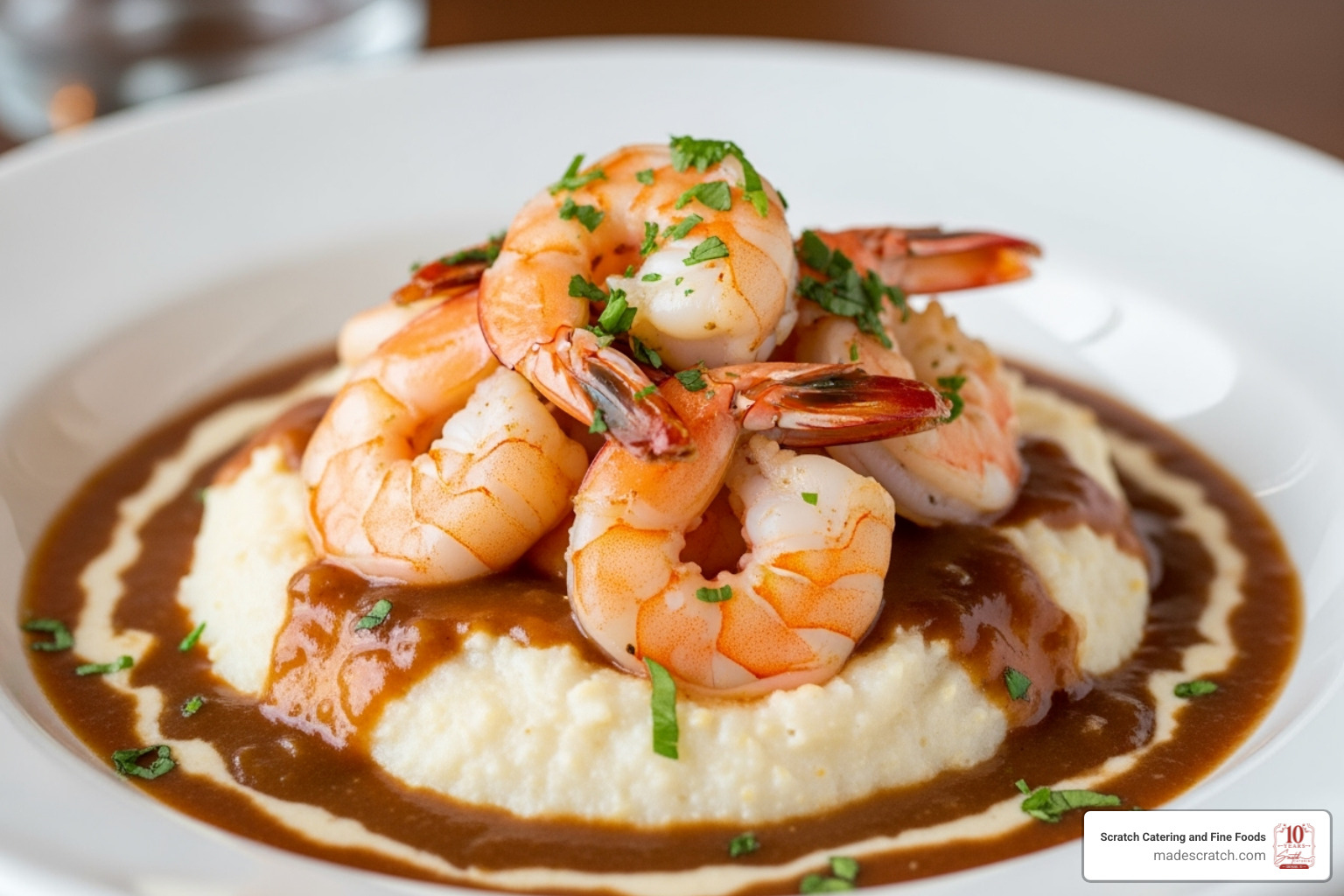
The best shrimp grits is a Southern classic that demands three elements in perfect harmony: creamy, stone-ground grits, tender, perfectly cooked shrimp, and a rich, flavorful sauce. Master these fundamentals, and you’ll create a restaurant-quality dish rivaling anything from Charleston or New Orleans.
The three pillars of exceptional shrimp and grits:
- Stone-ground grits cooked low and slow in a 5:1 liquid ratio until impossibly creamy.
- Large or jumbo wild-caught shrimp, cooked to a perfect pink-and-opaque color.
- A flavorful gravy built from bacon drippings, aromatics, and pan-fond.
This iconic Lowcountry dish originated with the Gullah-Geechee communities of coastal South Carolina and Georgia. What began as a simple fisherman’s breakfast has evolved into a gourmet staple.
Scratch Catering and Fine Foods brings this classic to life by focusing on quality ingredients and traditional techniques. Mastering the dish means giving each component individual care before they unite on the plate. The entire process takes about 30-40 minutes, with the grits simmering gently while you prepare the shrimp and a quick pan sauce.
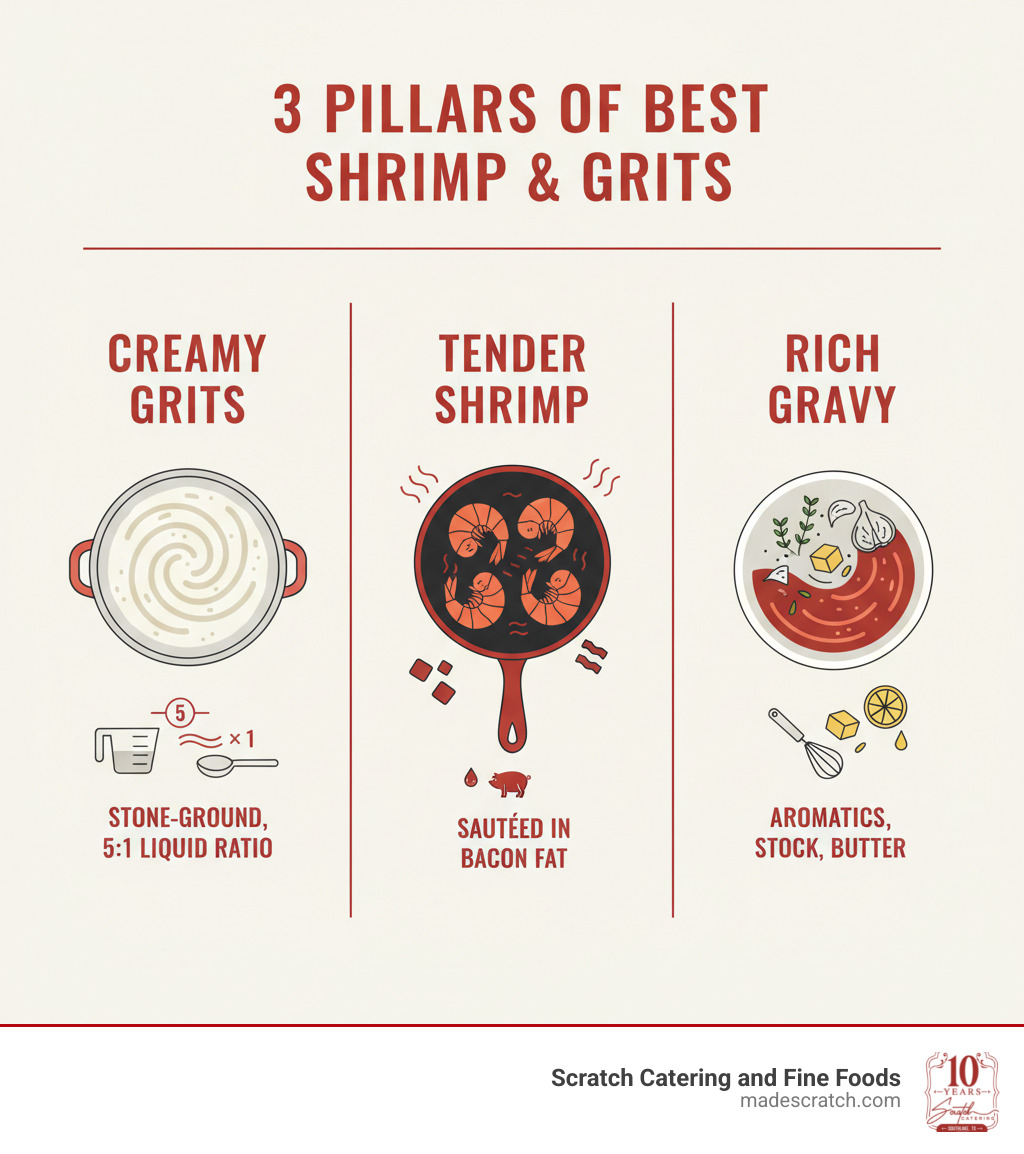
Best shrimp grits terms explained:
The Foundation: Choosing Your Core Ingredients
At Scratch Catering and Fine Foods, we know the secret to magnificent best shrimp grits isn’t fancy technique—it’s starting with high-quality ingredients. Every component matters, from the corn in your grits to the shrimp and vegetables. We source fresh, authentic ingredients that honor the dish’s Lowcountry roots, because exceptional raw materials are half the battle.
What Type of Grits Are Best for Shrimp and Grits?
For the best shrimp grits, always use stone-ground grits, not instant or quick-cooking varieties. Their coarse, irregular texture holds up during cooking, delivering a deep corn flavor. They take longer to cook, but the payoff is worth it.
The best grits are made from hominy (large-kerneled white corn). While both white and yellow grits are available, white grits are the classic Lowcountry choice. Grits also differ from polenta; they come from softer dent corn and are milled more coarsely, giving them a unique Southern texture. Avoid instant grits at all costs, as they sacrifice all the flavor and texture that make grits worthwhile.
If you want to experience grits the way they were meant to taste, explore heirloom varieties. You can learn about heirloom grits from Marsh Hen Mill, a wonderful source that preserves traditional flavors.
Selecting the Perfect Shrimp and Flavor-Makers
Once you’ve chosen your grits, focus on the shrimp and other flavor builders.
We recommend large or jumbo shrimp, as they offer a satisfying, meaty bite. If you can, source wild-caught Gulf shrimp for their superior flavor. Buying shrimp that’s already peeled and deveined saves valuable time.
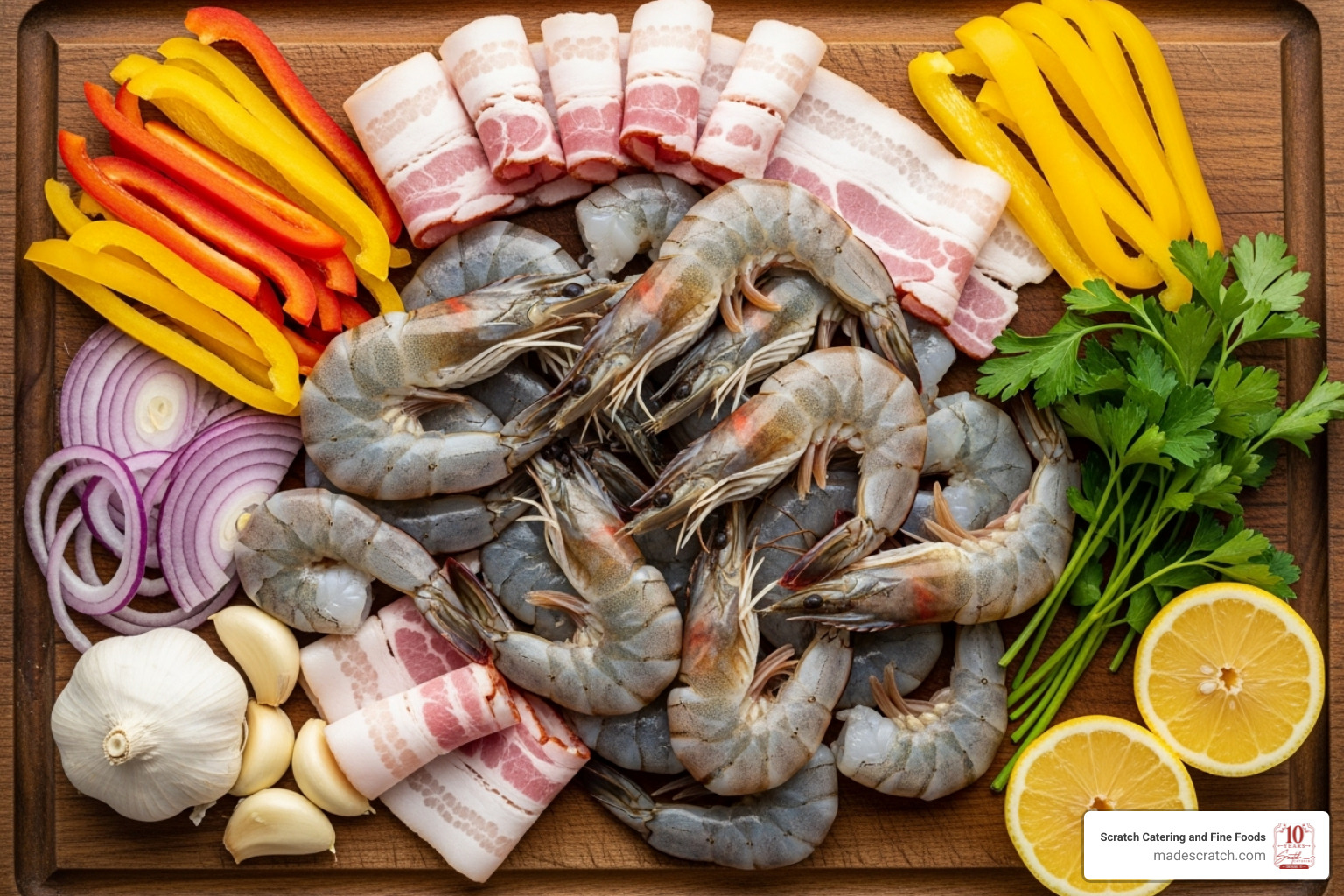
Now for the supporting ingredients that make the dish extraordinary:
- Bacon is the traditional choice for a smoky element; its rendered fat is liquid gold for sautéing. Some variations use andouille sausage for spice and smoke.
- The aromatic base is the Holy Trinity: onion, bell pepper, and celery. Sautéing them creates a sweet, savory foundation. Garlic and scallions add warmth and fresh notes.
- For cheese, sharp cheddar is the classic choice for creamy grits. For a more sophisticated flavor, try Gruyère. Choose a cheese that melts beautifully and adds real flavor.
At Scratch Catering and Fine Foods, we’ve learned that respecting these core ingredients makes all the difference.
Mastering the Technique for the Best Shrimp and Grits
Great ingredients are half the battle for the best shrimp grits; technique is the other. At Scratch Catering and Fine Foods, we’ve refined our method to help you avoid common pitfalls. The process is straightforward but requires attention to detail. Start the grits first, as they need 30-35 minutes to simmer. While they cook, you can prep the shrimp and aromatics.
How to Cook Impossibly Creamy, Cheesy Grits
Perfect grits require patience. Here’s how to avoid a lumpy, undercooked mess.
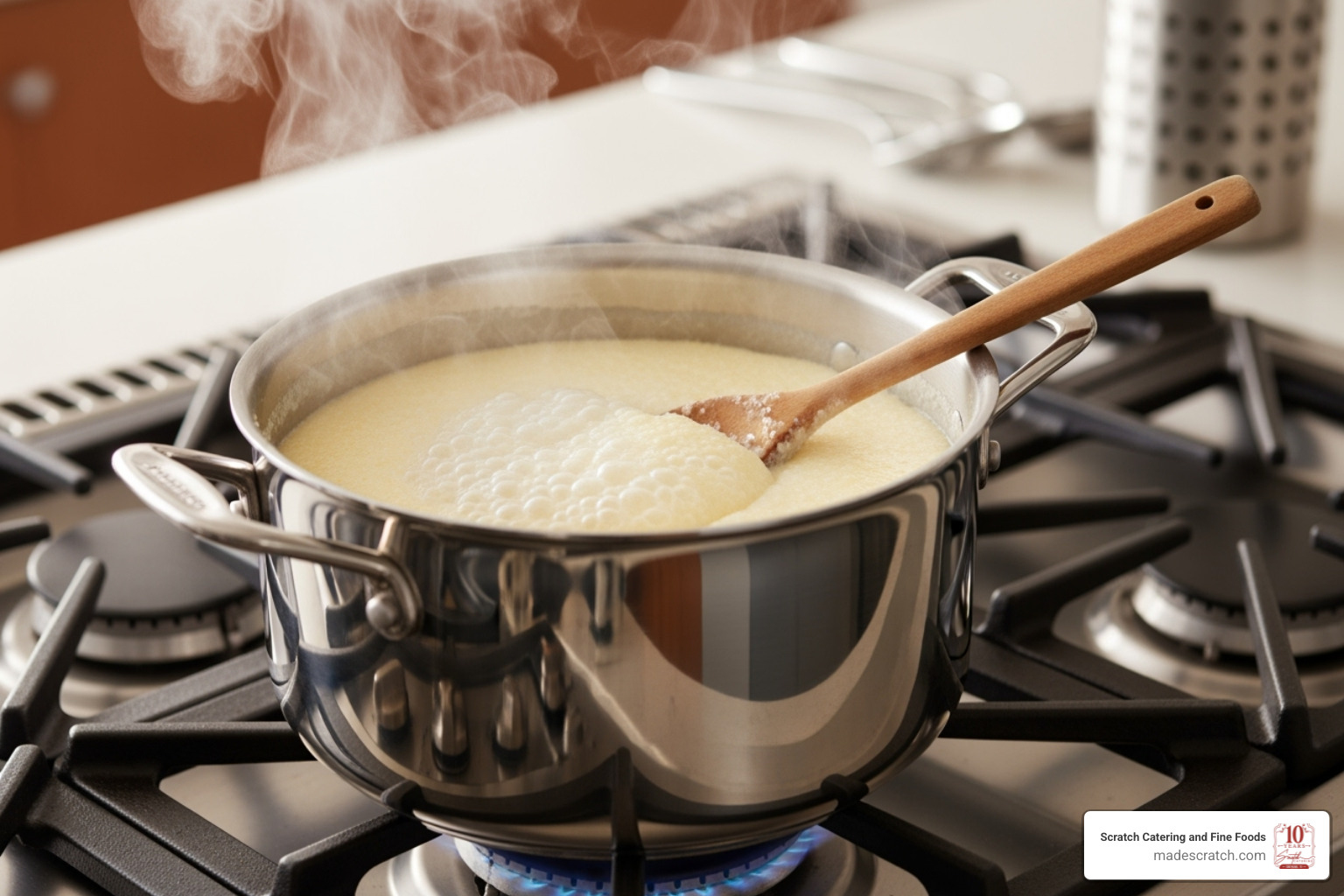
- Use the right ratio: Use at least 5 parts liquid to 1 part grits. The pot will look watery at first, but the coarse grains need it to become creamy.
- Choose your liquid wisely: Chicken stock adds savory depth, while milk or half-and-half creates ultra-rich grits. A combination of stock and water offers a good balance.
- Whisk to prevent lumps: Bring salted liquid to a boil and slowly whisk in the grits. This initial, constant whisking is crucial. Then, reduce heat to low, cover, and simmer for 30-35 minutes, stirring occasionally.
- Enrich at the end: When tender, stir in generous amounts of butter and cheese (like sharp cheddar or Gruyère). Season with salt and white pepper. Keep them warm, adding a splash of liquid if they thicken.
The Secret to Tender Shrimp and a Rich Gravy
Perfectly cooked shrimp should be tender and juicy, not tough. With a few simple tricks, you’ll nail it every time.
- Dry brine the shrimp: For guaranteed tenderness, toss one pound of peeled shrimp with 3/4 teaspoon of salt and 1/4 teaspoon of baking soda. Chill for at least 30 minutes.
- Cook them quickly: Sauté the shrimp in a hot pan for just 1-2 minutes per side until they turn opaque and pink. Pull them from the heat while they’re still just barely done.
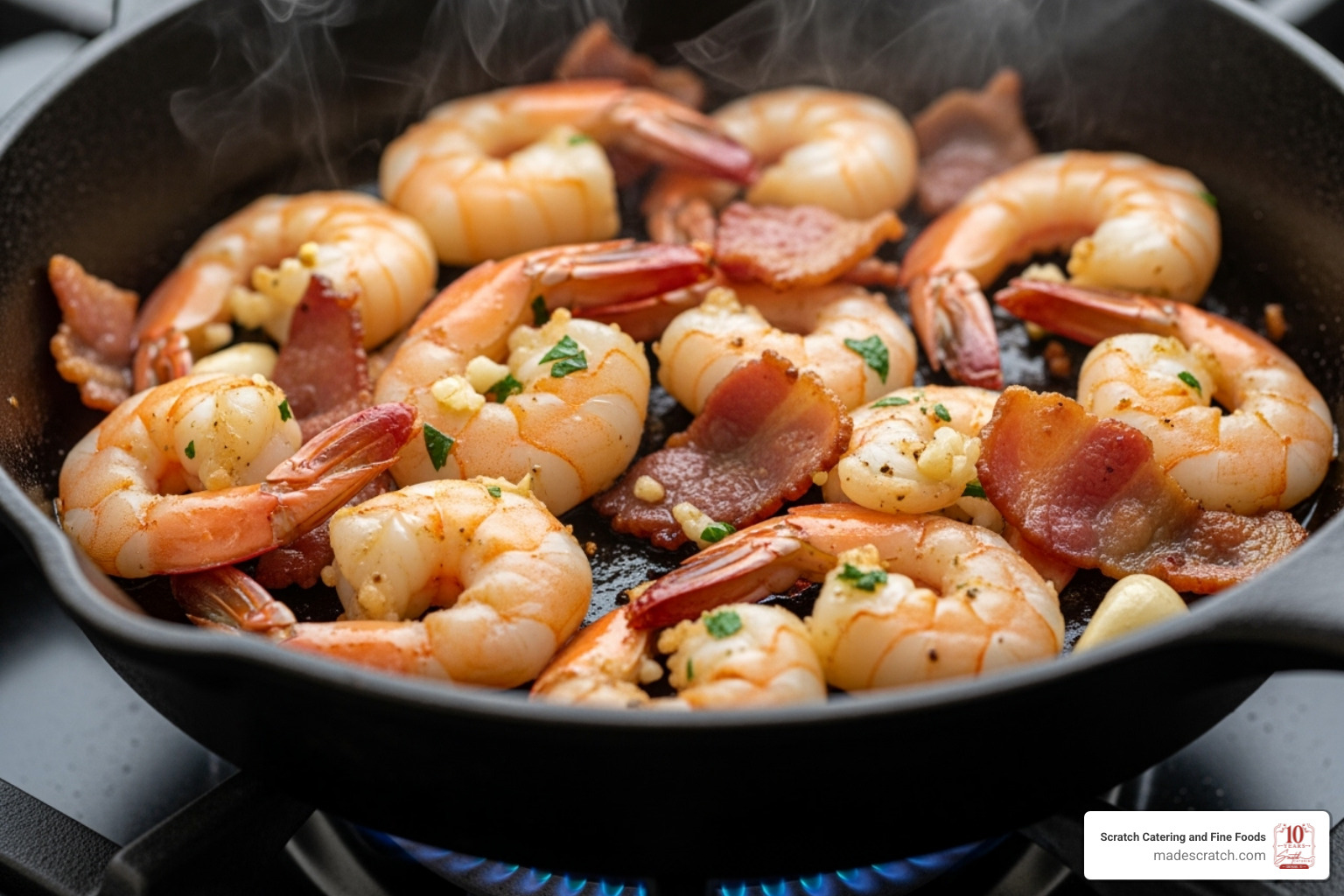
- Build the gravy: If using bacon, cook it until crispy and reserve about 3 tablespoons of the rendered fat. In the fat, sauté your aromatics (onion, bell pepper, celery, garlic) until tender.
- Make a roux: Sprinkle in a tablespoon of flour and cook for a minute. Then gradually whisk in chicken stock.
- Layer the final flavors: Return the cooked shrimp and crumbled bacon to the pan. Warm through, then finish with a squeeze of fresh lemon juice and fresh herbs. A pinch of cayenne pepper adds heat.
For more inspiration on how we build complex flavors, explore our full Menus. These same techniques guide everything we create at Scratch Catering and Fine Foods.
Exploring the Rich History and Variations
The story behind the best shrimp grits is as layered and satisfying as the dish itself. This isn’t just a recipe that someone invented in a restaurant kitchen last decade. It’s a culinary tradition that reaches back centuries, woven into the very fabric of Southern coastal life. When you sit down to a steaming bowl of shrimp and grits, you’re tasting history—a delicious intersection of cultures, ingredients, and the kind of resourcefulness that transforms simple pantry staples into something truly special.
The Lowcountry Origins of a Southern Icon
If you want to trace shrimp and grits back to its roots, you need to head to the Lowcountry—that beautiful stretch of coastal South Carolina and Georgia where the land meets the sea in a tangle of marshes, islands, and tidal creeks. Charleston, South Carolina, in particular, holds a special place in the dish’s history and is often considered its spiritual home.
The foundation of shrimp and grits begins with grits themselves, which have Native American origins. The Muskogee tribe created grits by grinding dried Indian corn (similar to hominy) into that characteristic coarse, “gritty” texture. Meanwhile, historical records show that Africans—particularly those brought from Mozambique—had their own culinary traditions of combining ground maize with shellfish, creating dishes that would feel familiar to anyone who’s enjoyed a good bowl of shrimp and grits.
These two traditions came together most beautifully in the Gullah-Geechee culture. The Gullah-Geechee people are descendants of Africans who were enslaved on the Sea Islands and along the coastal regions of the Carolinas and Georgia. Despite unimaginable hardship, they maintained strong connections to their African heritage, especially in their arts and foods. Their cooking transformed whatever ingredients were available—local seafood, stone-ground grits, vegetables from the garden—into nourishing meals that sustained families and communities.
What started as a humble fisherman’s breakfast gradually evolved into something more. Those early morning meals of grits and whatever shrimp could be caught that day became a beloved comfort food, eventually making its way from fishing villages to restaurant tables. The journey from necessity to delicacy is part of what makes shrimp and grits so special. You can explore this fascinating culinary lineage in more depth by reading Shrimp and Grits: A History.
Popular Regional Twists on a Classic
Here’s the beautiful thing about best shrimp grits: while it has deep roots in the Lowcountry, the dish has traveled and transformed as it moved through different Southern kitchens. Almost every cook who makes it regularly has developed their own preferred version, tweaking ingredients and techniques to suit local tastes and available ingredients.
The Charleston style stays closest to those Lowcountry origins. It typically features a straightforward gravy built from bacon drippings and aromatics like onions and bell peppers, sometimes enriched with a touch of chicken stock or cream. The spotlight remains firmly on those creamy, cheesy grits and perfectly tender shrimp—letting quality ingredients speak for themselves.
Travel west to Louisiana, and you’ll encounter the New Orleans Creole style, which brings bolder flavors to the table. This version often includes a darker roux, more assertive seasonings, and the classic Creole “Holy Trinity” base of onion, celery, and bell pepper. Blackened shrimp frequently makes an appearance here, adding a spicy, charred dimension that wakes up your taste buds.
The Gullah style with crab gravy represents one of the most authentic and traditional variations. This version honors those deep cultural roots by incorporating fresh crab meat into a rich gravy, sometimes made with a dark roux and seafood stock that delivers an even more pronounced taste of the ocean. It’s a preparation that connects directly to those early coastal communities.
Moving inland to Chapel Hill, North Carolina, Chef Bill Neal’s famous recipe from Crook’s Corner helped transform shrimp and grits from a regional specialty into a dish with national recognition. His version features shrimp, mushrooms, bacon, and scallions in a light gravy, served over grits enriched with both cheddar and Parmesan cheese. This interpretation helped lift the dish beyond its breakfast origins into something appropriate for any meal.
Along the Gulf Coast—through Alabama, Mississippi, and Louisiana—you’ll find variations that showcase local Gulf shrimp and often incorporate spicier sauces or unique regional touches. Some cooks add andouille sausage for extra smokiness, while others might include okra or tomatoes for a different flavor profile entirely.
At Scratch Catering and Fine Foods, we appreciate how these regional differences demonstrate the versatility of shrimp and grits. The core elements remain constant—creamy grits, tender shrimp, flavorful sauce—but the interpretation is endlessly adaptable. That’s what makes exploring this dish so rewarding, whether you’re cooking at home or enjoying it at a catered event.
Serving, Storing, and Pairing Your Masterpiece
You’ve mastered the technique, sourced quality ingredients, and created a bowl of best shrimp grits that would make any Southern grandmother proud. Now comes the final act: bringing it all together in a way that honors your effort and delights everyone at the table.
What Side Dishes Pair Well with Shrimp and Grits?
Here’s the beautiful truth about shrimp and grits: it’s substantial enough to stand alone, yet it welcomes companions that add brightness and balance to its rich, creamy nature. At Scratch Catering and Fine Foods, we’ve found that the best sides either cut through the richness with fresh, vibrant flavors or lean into the comfort food experience with traditional Southern staples.
Collard greens are a classic pairing for good reason. Whether braised low and slow with a ham hock or smoked turkey, their slightly bitter earthiness provides the perfect counterpoint to creamy grits. If you prefer something lighter, sautéed spinach with garlic offers a similar fresh contrast without the extended cooking time.
Roasted asparagus brings an neat touch to the plate, especially when you’re serving shrimp and grits for a dinner party rather than a casual weeknight meal. The slight char and crisp-tender texture add visual appeal and a welcome crunch.
For those who want to accept the full Southern experience, buttermilk biscuits or cornbread are non-negotiable. There’s something deeply satisfying about tearing off a piece of warm, fluffy biscuit and using it to soak up every last bit of that bacon-infused gravy. Fried okra takes things in a different direction, adding a crispy, slightly tangy element that plays beautifully against the soft grits.
The key is choosing sides that either refresh your palate or deepen the comfort food experience, never overwhelming the star of the show.
Make-Ahead and Reheating Tips for the Best Shrimp and Grits
Let’s be honest: shrimp and grits is at its absolute peak when everything comes together fresh and hot. The grits are silky, the shrimp are tender, and that gravy is vibrant with just-cooked flavor. But we also live in the real world, where make-ahead strategies and leftover management matter.
Grits are forgiving friends when handled properly. You can cook them ahead and keep them warm on the stovetop for about an hour, stirring occasionally and adding a splash of liquid if they start to thicken too much. If you’re making them a day in advance, store them in an airtight container in the refrigerator. When it’s time to reheat, here’s the secret: grits firm up dramatically as they cool, so you’ll need to coax them back to life. Place them in a pot over low heat and gradually whisk in extra chicken stock, milk, or even just water until they return to that luxurious, creamy consistency you worked so hard to achieve.
The gravy can absolutely be made ahead – in fact, flavors often deepen overnight. Prepare your bacon, aromatics, and sauce base, then store it in the refrigerator for up to two days. When you’re ready to serve, gently reheat the gravy in a skillet over medium-low heat.
Here’s where things get critical: never reheat cooked shrimp if you can avoid it. Shrimp turn rubbery and tough when reheated, losing that tender, snappy texture that makes them so appealing. Instead, cook your shrimp fresh just before serving, then add them to the warmed gravy for just a minute or two to heat through. This approach gives you the convenience of advance preparation while ensuring your shrimp stay perfect.
If you absolutely must reheat fully assembled leftovers, do so gently over low heat and for the shortest time possible, adding extra liquid to the grits as needed. But between you and us? The best shrimp grits experience always involves fresh-cooked shrimp meeting just-finished grits. That’s when magic happens.
Frequently Asked Questions
As we guide people through crafting the best shrimp grits, we hear certain questions again and again. Here are the answers to help you steer any uncertainties and create a dish you’ll be proud to serve.
Can I make shrimp and grits without bacon or pork?
Yes, you absolutely can! At Scratch Catering and Fine Foods, we understand that dietary preferences and restrictions vary, and the beauty of this dish is its adaptability. While bacon drippings do bring that irresistible smoky depth that makes traditional best shrimp grits so memorable, you can create a wonderfully flavorful version without any pork products.
Simply sauté your shrimp and aromatics in good quality butter or olive oil instead of bacon fat. To replace that missing smokiness, add a generous pinch of smoked paprika to your seasoning blend – it works wonders. You might also want to taste and adjust your salt, since bacon naturally adds quite a bit of salinity to the dish.
For a completely different take that’s equally delicious, consider using our Blackened Gulf Shrimp as your protein. The bold spices and charred crust bring their own complex flavors that stand beautifully on their own, no bacon required.
What’s the difference between grits and polenta?
This question comes up constantly, and honestly, it’s a fair one! At first glance, grits and polenta seem nearly identical – both are porridges made from dried, ground corn that you simmer in liquid. But there are some key differences that give each its distinct character.
The type of corn matters. Grits are typically made from dent corn, which is a softer variety. Polenta, on the other hand, usually comes from flint corn, which is harder and denser. This difference in the corn itself affects the final texture and flavor.
The grind size varies too. Grits are usually milled more coarsely and with a more irregular grind than polenta. That coarser texture is part of what gives grits their distinctive, hearty character – that satisfying “grit” you feel on your tongue.
Regional origin and tradition also set them apart. Grits are deeply rooted in Southern American cuisine, with a rich history in the Lowcountry and Gullah-Geechee culture. Polenta hails from Northern Italy, where it’s been a staple for centuries.
While the cooking process is similar for both, these differences in corn type and grind size create subtle but noticeable texture differences. Grits tend to have a slightly more rustic, toothsome quality that’s perfect for soaking up that rich shrimp gravy.
How do I keep my grits from getting lumpy?
Lumpy grits are probably the most common kitchen frustration we hear about, but the good news is they’re completely preventable! The secret really comes down to your technique at the beginning of the cooking process.
Start by whisking your grits slowly into boiling, well-salted liquid. Don’t just dump them all in at once – that’s a recipe for clumps. Instead, pour them in gradually while whisking continuously. This helps each grain disperse evenly throughout the liquid before it has a chance to clump together.
Keep whisking frequently for the first 10-15 minutes. Once all the grits are incorporated, reduce your heat to low and continue stirring every few minutes. This initial attention is crucial – it’s when most lumps form.
Cook on low heat throughout. After that initial whisking period, you can cover the pot and let the grits simmer gently, stirring occasionally. This low and slow approach allows them to absorb the liquid evenly and develop that creamy, smooth texture you’re after. Rushing the process with high heat will give you grainy, lumpy results.
Patience is your friend when making grits. Give them the time and attention they deserve at the start, and you’ll be rewarded with impossibly creamy results every time.
Conclusion
You now have everything you need to create truly memorable best shrimp grits in your own kitchen. We’ve walked through the essential techniques together – from selecting stone-ground grits and wild-caught Gulf shrimp to building that rich, flavorful gravy that brings everything together. You’ve learned about the dish’s deep roots in the South Carolina Lowcountry and the Gullah-Geechee culture, finded regional variations from Charleston to New Orleans, and mastered the secrets to creamy grits and perfectly tender shrimp.
The real beauty of Southern cooking lies in its generosity of spirit. These dishes welcome you in, reward patience, and turn simple, quality ingredients into something that nourishes both body and soul. Whether you’re drawn to a classic Lowcountry preparation or want to experiment with a spicier Creole twist, you now understand the core principles that make this dish shine.
Of course, we also know that life gets busy. Sometimes you want to enjoy exceptional best shrimp grits without spending the evening in the kitchen. That’s exactly where Scratch Catering and Fine Foods comes in. For an effortless gourmet experience, consider our Shrimp and Grits Catering services, where award-winning chef Teddy B. brings his expertise and passion directly to your table.
Ready to lift your next event with unforgettable Southern cuisine? Whether you’re hosting in Southlake TX, Dallas, Fort Worth, Plano, Frisco, McKinney, Arlington, Grapevine, or anywhere across the DFW Metroplex, Scratch Catering and Fine Foods has you covered. Explore our Texas caterers services and let us bring the authentic flavors of the South to you. Your guests will thank you, and you’ll get to enjoy the party right alongside them.

