

What Makes Grits Truly Award-Winning
Award winning grits begin with high-quality ingredients and meticulous technique, but the true secret lies in a deep appreciation for their journey. These humble ground corn kernels have transformed from a simple Southern breakfast staple into a versatile canvas for culinary artistry, gracing the menus of fine dining establishments and catered events alike. The difference between a forgettable, watery bowl and a rich, creamy masterpiece is all in the details.
To achieve that coveted texture and flavor, you must treat the process with patience and respect. As Chef Amber Huffman famously says, “I seriously have received three marriage proposals over a bowl of my cheese grits.” That’s the profound power of perfectly executed grits—they create an emotional, memorable experience that lifts a simple side dish into something truly unforgettable.
At Scratch Catering and Fine Foods, our award-winning chef Teddy B. and culinary team bring the same level of care to grits as we do to our creative, ready-to-serve holiday meals and daily menus for pickup and reheating. Our approach is grounded in technique, tested in high-volume events across Dallas-Fort Worth, and refined so you can replicate success at home.
A Deeper Look at the Winning Technique
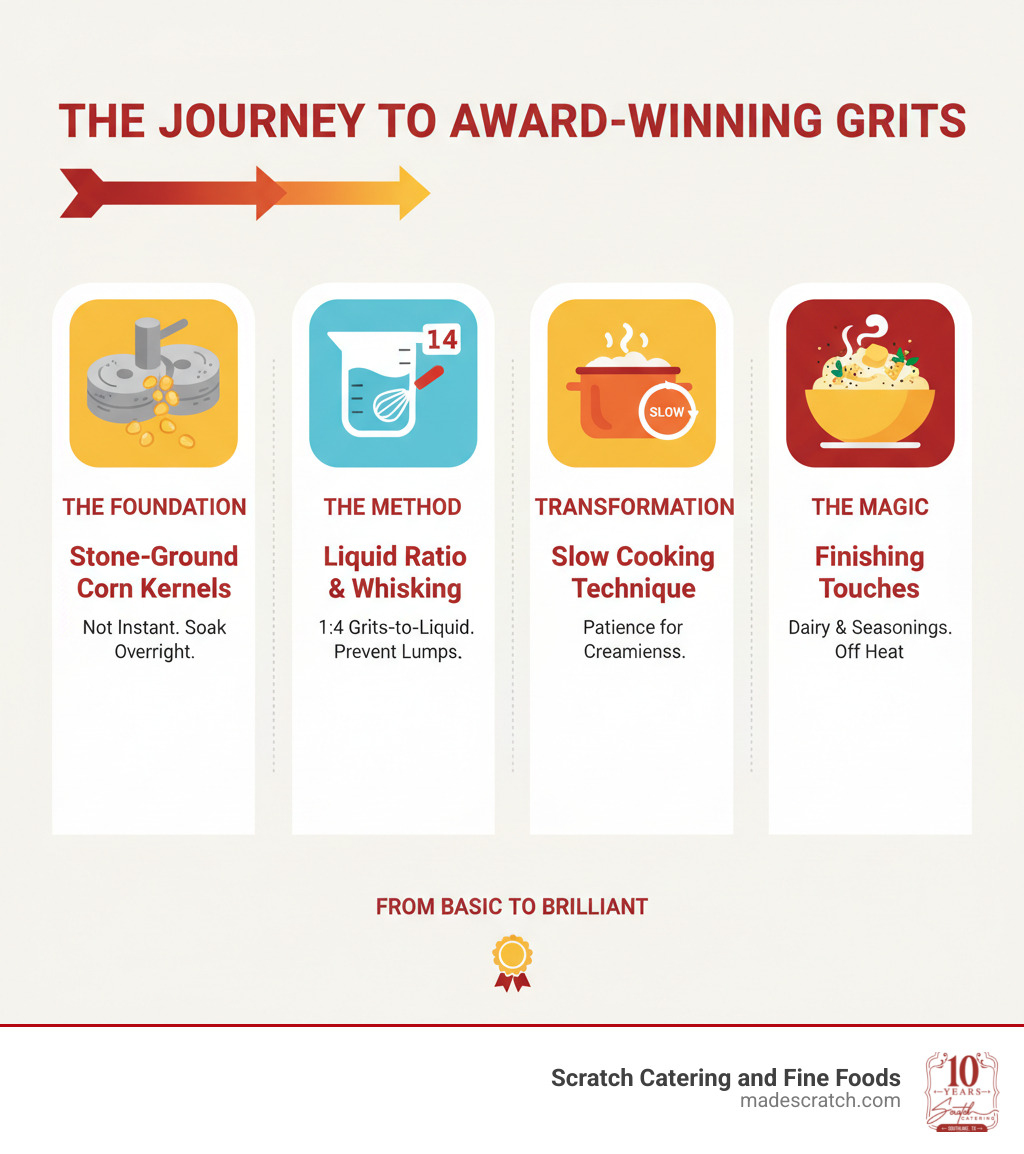
This quick overview provides the foundational steps, but understanding the ‘why’ behind each one is what separates the amateur from the expert.
- Use Stone-Ground Grits: This is non-negotiable. Never opt for instant or quick-cooking varieties if you’re aiming for excellence. Stone-ground grits retain the corn germ, which is packed with natural oils and flavor, giving you a much richer, nuttier, and more authentic corn taste. The coarse, irregular grind also contributes to a superior, more substantial texture.
- Soak Overnight: While not strictly necessary, this professional tip makes a world of difference. Soaking your grits in water or milk overnight hydrates the hard, dried kernels. This not only reduces the cooking time but also helps them release their starches more evenly, resulting in an exceptionally creamy consistency without any raw, gritty bite.
- Cook in a 1:4 Ratio: A ratio of one part grits to four parts liquid (e.g., 1 cup grits to 4 cups liquid) is the industry standard starting point. This liquid can be water, chicken or vegetable stock for a savory depth, or milk and cream for ultimate richness. The key is to bring the liquid to a simmer before adding the grits to prevent them from sinking and clumping.
- Whisk Constantly (At First): The first two minutes are critical. As you slowly pour the grits into the simmering liquid, whisk vigorously and constantly. This initial agitation ensures every grain is suspended in the liquid, preventing lumps from forming and stopping the grits from scorching on the bottom of the pot. After this, you can reduce the heat to low and stir occasionally.
- Finish with Butter, Cream, and Cheese Off the Heat: Once the grits are fully cooked and have reached your desired thickness, remove them from the heat source. Then, stir in your enrichments like butter, heavy cream, and shredded cheese. Adding dairy off the heat prevents the fat from separating or the cheese from becoming stringy and oily, ensuring a smooth, emulsified, and velvety finish.
- Season Generously: Grits are a blank canvas and require bold seasoning to shine. Salt is essential—add it during the cooking process and adjust at the end. It awakens the natural sweetness of the corn. Freshly ground black pepper and a touch of garlic powder add a classic savory backbone that complements the richness of the dairy.
Why These Steps Work (The Science in Simple Terms)
- Hydration from soaking lets starch swell evenly so the grains cook through without tough centers.
- Gentle heat keeps starches from seizing; low and slow equals creamy, not gluey.
- Initial whisking disperses grains, prevents clumps, and stops early scorching before the mixture thickens.
- Off-heat enrichment protects dairy fats and proteins, so your finish stays glossy and unified.
Flavor Architecture: Building Layers Like a Pro
- Infuse the liquid: Simmer stock or milk with smashed garlic, a bay leaf, thyme, or a Parm rind. Strain before adding grits for subtle, layered flavor.
- Bloom spices in fat: Melt butter, then briefly warm paprika, black pepper, or a pinch of cayenne to release aromatic oils before whisking in the liquid.
- Choose cheeses with purpose: Sharp cheddar for tang, smoked gouda for depth, Parmesan for umami. Blend 2 cheeses for balance (one melty, one punchy).
- Add a smart finish: A small squeeze of lemon, a splash of hot sauce, or a knob of cultured butter at the end brightens richness and wakes up the palate.
Make-Ahead, Holding, and Reheating (Caterer Secrets)
- Make-ahead window: Cook grits slightly looser than you want, then cool quickly. Refrigerate up to 4 days.
- Reheating: Warm gently over low heat with hot stock, milk, or water to restore silkiness. Whisk as they loosen. For the microwave, reheat in 50% power bursts, whisking between intervals.
- Holding for service: Keep warm over a double boiler or on the lowest flame, covered. Stir and thin with hot liquid as needed.
- Freezing: Possible for up to 1 month; thaw in the fridge, then reheat gently with added liquid and finish with fresh butter/cheese for best texture.
This is exactly how Scratch Catering and Fine Foods keeps grits at their peak for events in Southlake, Dallas, Fort Worth, Plano, Frisco, McKinney, Arlington, Grapevine, and across the greater Dallas-Fort Worth area—silky, hot, and perfectly seasoned from the first plate to the last. It’s also why our ready-to-serve holiday meals and daily menus for pickup and reheating come out of your kitchen tasting like they were just cooked by a chef.
Troubleshooting: Quick Fixes for Common Pitfalls
- Lumpy: Whisk hard while adding a splash of hot liquid. Use a firm silicone whisk to break clumps.
- Too thick: Thin gradually with hot stock or milk; season again at the end.
- Too thin: Simmer longer over very low heat, stirring; or stir in a spoonful of finely grated Parmesan to tighten.
- Grainy center: Keep cooking low and slow with a little extra hot liquid until tender.
- Too salty: Balance with unsalted butter, cream, or unseasoned hot liquid; a squeeze of lemon can help perception.
The journey from basic to brilliant isn’t complicated, but it demands attention to detail. At Scratch Catering and Fine Foods, we have spent years perfecting these techniques. Our clients across the Dallas-Fort Worth area, from Southlake to Frisco, expect nothing less than culinary excellence, and our grits consistently deliver. Whether you’re planning a neat brunch or a casual gathering, understanding these fundamentals will lift your grits from ordinary to extraordinary.
Must-know Award winning grits terms:
The Foundation: Choosing the Right Grits
Think of grits like coffee beans or wine grapes—the quality of what you start with fundamentally determines everything that follows. Award winning grits don’t happen by accident. They begin with a deliberate choice at the source, and that means understanding the corn itself and, more importantly, the way it’s milled.
Grits are made from dried corn, typically a variety known as dent corn, which has a soft, starchy center. But the critical distinction lies in the milling process. This single factor dictates the flavor, texture, and cooking properties of the final product, making the difference between grits that taste like cardboard and grits that earn marriage proposals.
Why Stone-Ground Grits Are Your Secret Weapon
Stone-ground grits are your non-negotiable secret weapon. These are produced using an old-world method where the dried corn kernels are ground slowly between two large, heavy stone wheels. This process is gentle and generates very little heat, which is crucial because it preserves the corn’s germ. The germ is the heart of the kernel, containing natural oils, nutrients, and the vast majority of the corn’s authentic flavor. The result is a coarser, more irregular grind that bursts with a nutty, sweet corn taste and cooks into a wonderfully creamy yet substantial texture. Yes, they take longer to cook—typically 45 to 60 minutes—but this slow simmer is an investment in flavor that pays delicious dividends on your plate.
In contrast, most mass-produced quick or instant grits are made using modern steel roller mills. These high-speed, high-heat mills strip away both the hull and the germ to create a uniform, fine product with a long shelf life. Unfortunately, this industrial efficiency comes at the cost of flavor and texture, leaving you with a bland and often one-dimensional product.
Sourcing quality corn matters more than you might think. The best grits come from mills that take pride in their craft, often using heirloom corn varieties and traditional grinding methods. More about stone ground grits can help you find quality options that will transform your cooking. At Scratch Catering and Fine Foods, we’ve built our reputation on the principle that cutting corners on ingredient quality is never an option. It’s a philosophy that resonates with our clients across Dallas, Fort Worth, and Plano, who trust us for an unparalleled culinary experience.
Your Guide to the Different Types of Grits
Understanding the options available will help you appreciate why stone-ground is the superior choice for gourmet applications.
| Type of Grits | Grind | Texture | Cooking Time | Best Use |
|---|---|---|---|---|
| Stone-Ground | Coarse | Creamy, substantial | 45-60 minutes | Award winning grits, fine dining, special occasion meals where flavor and texture are paramount. |
| Hominy | Medium | Smooth, soft, distinct | 30-40 minutes | Traditional Southern and Mexican dishes. The corn is soaked in an alkaline solution, which changes its flavor and texture. |
| Quick | Fine | Smooth but can be thin | 5-10 minutes | Best for busy weekday mornings when time is the primary concern. The texture and flavor are a significant compromise. |
| Instant | Very fine | Often gummy or pasty | 2-5 minutes | For emergency situations only. These are pre-cooked and dehydrated, losing almost all authentic texture and flavor. |
The ultimate takeaway is clear: if you want to create grits that people will remember and rave about, you must start with stone-ground. Your patience during the longer cooking process will be rewarded tenfold with a dish that has real character, depth, and an unforgettable creamy texture—the kind that makes guests ask for your recipe and keeps them talking long after the meal is over.
Pro Tips on Selection, Variety, and Storage
- Color and variety: White grits tend to be slightly sweeter and delicate; yellow grits often taste a bit cornier and more robust. Either can be award-worthy—choose based on the flavor profile you want with your mains.
- Freshness matters: Because stone-ground grits retain the germ (and its flavorful oils), they are more perishable. Buy in smaller quantities, look for a mill date, and store airtight in the refrigerator or freezer to prevent rancidity.
- Feel the grind: A good stone grind looks varied and rustic, with fine flour and larger flecks. That variety is what yields creaminess with gentle texture.
- Rinsing? Optional: Some cooks briefly rinse to remove loose bran. We usually skip rinsing to keep full corn flavor and natural thickening power.
Hominy vs. Stone-Ground: When to Choose Which
Hominy grits (made from nixtamalized corn) bring a unique, slightly alkaline-sweet aroma and a softer texture. They shine with smoky, spicy toppings or rich braises. For pure corn sweetness and a toothsome, luxurious body, stone-ground remains the first choice for award winning grits.
Sourcing Confidence in DFW
In Dallas-Fort Worth, specialty markets and well-stocked grocers often carry reputable stone-ground brands. If you can’t find them locally, order directly from mills or trusted online retailers. At Scratch Catering and Fine Foods, our culinary team, led by award-winning chef Teddy B., vets suppliers rigorously so the grits we serve at events in Southlake, Frisco, McKinney, Arlington, Grapevine, and the wider DFW area are consistently exceptional.
Storage and Prep Checklist (Chef-Approved)
- Transfer to airtight containers; refrigerate or freeze.
- Label with purchase date; use within a few months for peak flavor.
- Soak overnight when time allows for faster, creamier results the next day.
- Taste as you cook—quality grits should taste like fresh, sweet corn, even before butter and cheese.
Frequently Asked Questions about Award-Winning Grits
When you’re curious about what makes grits truly exceptional, it’s natural to want clear answers before you try or serve them. Below are the questions we hear most often about award-winning grits and why this humble Southern staple can become a culinary highlight worth celebrating.
What makes grits creamy instead of grainy?
Using stone-ground grits, low heat, enough liquid, and slow cooking creates a smooth, creamy texture.
Can grits be made ahead of time?
Yes. Cook them slightly loose, refrigerate, and reheat gently with warm liquid while stirring.
Are stone-ground grits better than instant grits?
Yes. Stone-ground grits have better flavor, texture, and nutrition compared to instant varieties.
Conclusion
Award-winning grits are more than a side dish. They are a reflection of craftsmanship, patience, and respect for Southern culinary tradition. When grits are made the right way, from carefully selected ingredients and cooked with intention, they deliver comfort, depth of flavor, and a sense of authenticity that guests immediately recognize and appreciate.
From their creamy texture to their rich, balanced taste, these grits showcase what happens when simplicity is elevated through skill and care. Choosing award-winning grits means choosing quality over shortcuts and flavor over trends. It is a small detail that makes a lasting impression and turns a great meal into a memorable one.
Great grits are not about shortcuts or trends. They are about patience, quality ingredients, and proper technique. At Scratch Catering and Fine Foods, these principles guide every recipe we serve, from catered events to ready-to-enjoy meals. When grits are made with care, they become more than comfort food. They become a dish people remember and talk about.

